
CUSTOM PRODUCT CONFIGURATORS FOR WOOCOMMERCE
Custom WooCommerce Product Configurators for Complex Products
When customers need to choose more than a size or color, the product page becomes part of the product itself. SleekAlgo builds custom WooCommerce configurators around the actual rules of your products — including option availability, visual previews, dynamic pricing and configuration data that follows the customer into cart and order records.
Guided Product Builders
Live Visual Preview
Dynamic Pricing
Custom Option Logic
Cart & Order Data
When Standard Product Options Break Down
WooCommerce handles straightforward variations very well. Complexity appears when a product has many dependent choices, different option sets by model, pricing changes across selections, visual layers that must update live, or hundreds of choices that become painful to represent as conventional variations.
Typical signs that a custom configurator may be justified:
Customers need several dependent choices before a product is valid
Available options differ by product, model, supplier or prior selection
Selections change the final price
The customer needs a visual preview of the configured product
Thousands of conventional variations would be difficult to maintain
Staff need a purpose-built backend for option groups, prices and assets
The chosen configuration must be preserved in cart, checkout and order records
Built Around Your Product Logic — Not a Generic Builder
A configurable product is rarely just a collection of dropdowns. We model the buying rules first, then build the customer interface and WordPress management tools around them.
Product / Model
→
Option Groups
→
Customer Selections
→
Live Preview + Dynamic Price
↓
Cart / Order
Materials
Colors
Patterns
Finishes
Sizes
Text
Logos
Add-ons
The product rules determine the configurator architecture — not the other way around.
LIVE VISUAL CONFIGURATION
Live Preview When Customers Need to See the Result
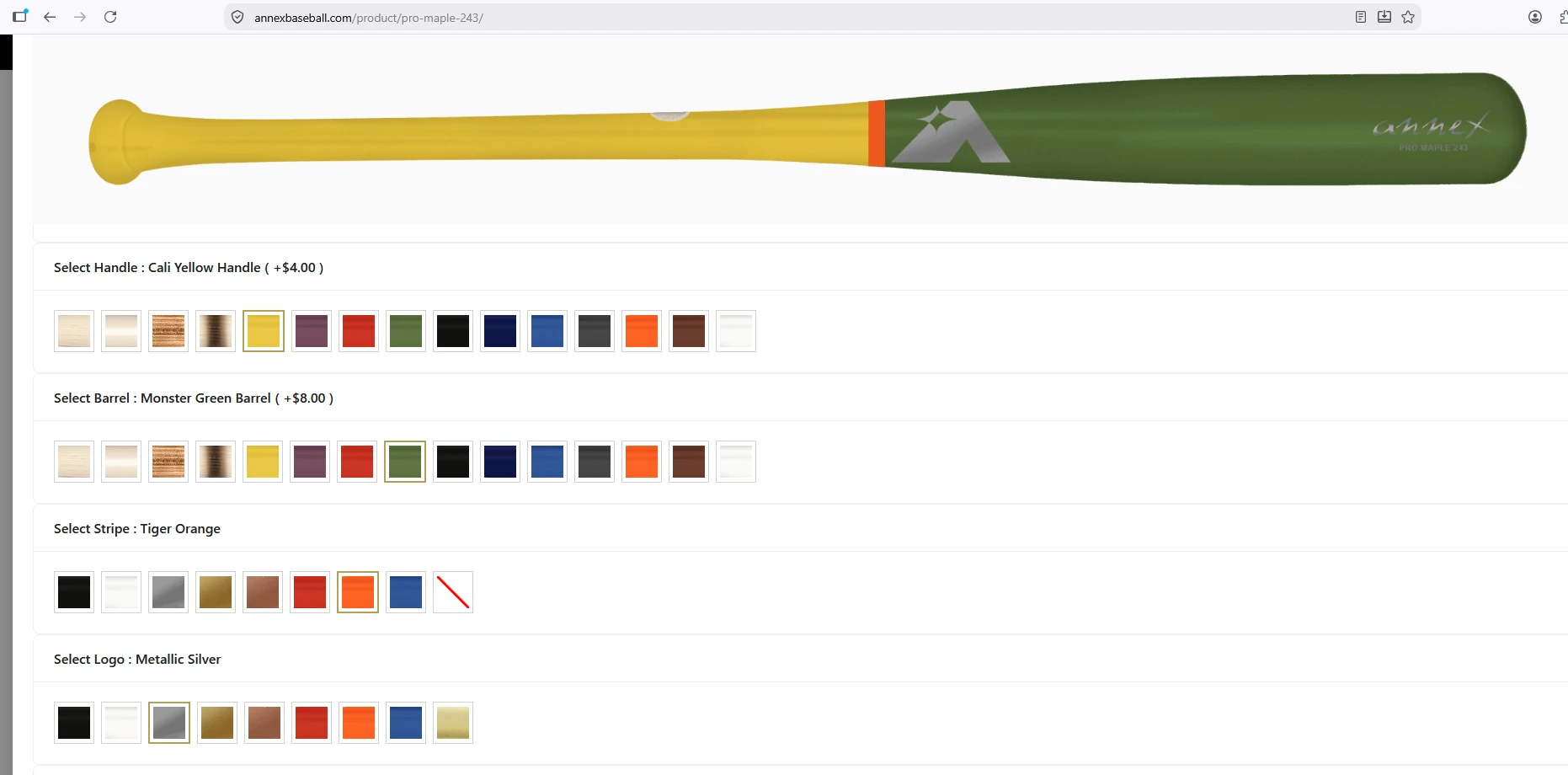
For highly visual products, the configurator can update the product as the customer changes colors, patterns, finishes or other visible options. The technical challenge is not simply switching images — separate visual assets often have to align precisely so the result looks like one finished product.
Handle
Barrel
Stripe
Logo
Text
↓
One Seamless Bat Preview
Independently configurable layers had to align precisely across every combination while still updating live as options change.
Dynamic Pricing Without Forcing Every Combination Into Variations
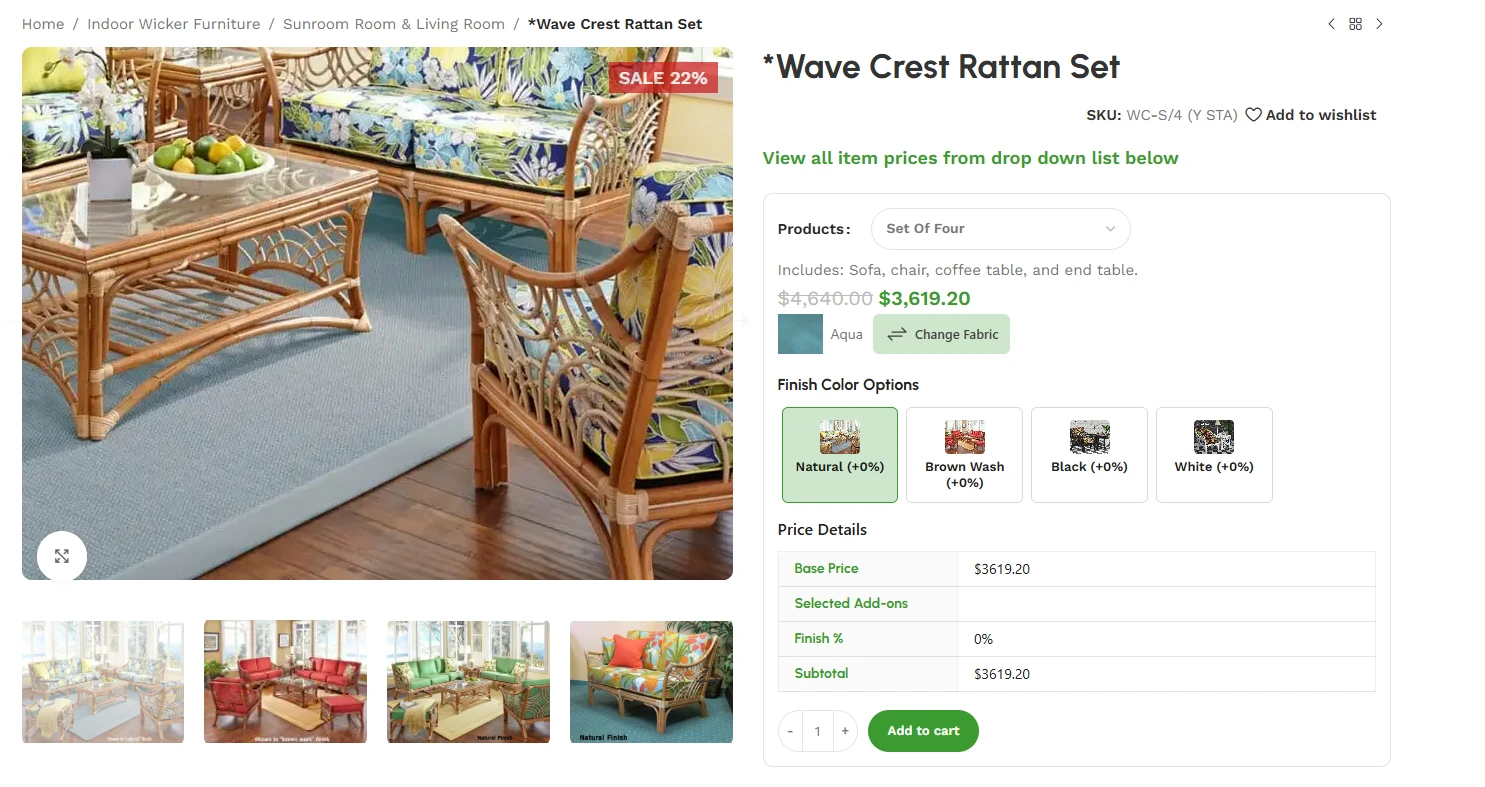
A custom product builder can calculate price from the customer’s selected options instead of requiring every possible combination to exist as a conventional WooCommerce variation. That can make both the buying experience and the backend dramatically easier to manage when the product rules are complex.
Materials
Fabrics
Finishes
Add-ons
Premium Patterns
Rush Production
REAL WOOCOMMERCE CONFIGURATOR PROJECTS
Proof: Two Very Different Configurators
The same engineering capability can solve very different product problems. Kozy Kingdom and Annex Baseball demonstrate two distinct configurator architectures rather than one generic product-builder template.
FABRICS · PRICING · OPERATIONS
Kozy Kingdom
Complex Furniture Configuration
Complex furniture options, fabrics, pricing and operational management — configurable rattan furniture with large fabric libraries, finishes, add-ons, dynamic pricing and complex shipping.
3,476 fabric records captured in the custom fabric-management interface
Approximately 50 active shipping-charge scenarios in the captured configuration
Custom pricing workflow connected to Google Sheets
LIVE PREVIEW · CUSTOM TEXT · MODEL LOGIC
Annex Baseball
Interactive Bat Builder With Live Preview
Model-specific configuration, colors/patterns, custom text and live layered preview — bats previously sold offline, now configurable and orderable online.
Model-specific wood, size, weight, color and stripe options
Live visual preview with custom text and logo layers
Custom WordPress management for models, options and pricing
Same engineering capability. Completely different product requirements.
The Backend Matters as Much as the Frontend
A beautiful configurator becomes a maintenance problem if every normal change requires a developer. We design the backend around how the business actually manages products. The objective is not just a better product page. It is a system the business can operate.
Product / Model
→
Option Groups
→
Individual Options
→
Images / Prices / Priority
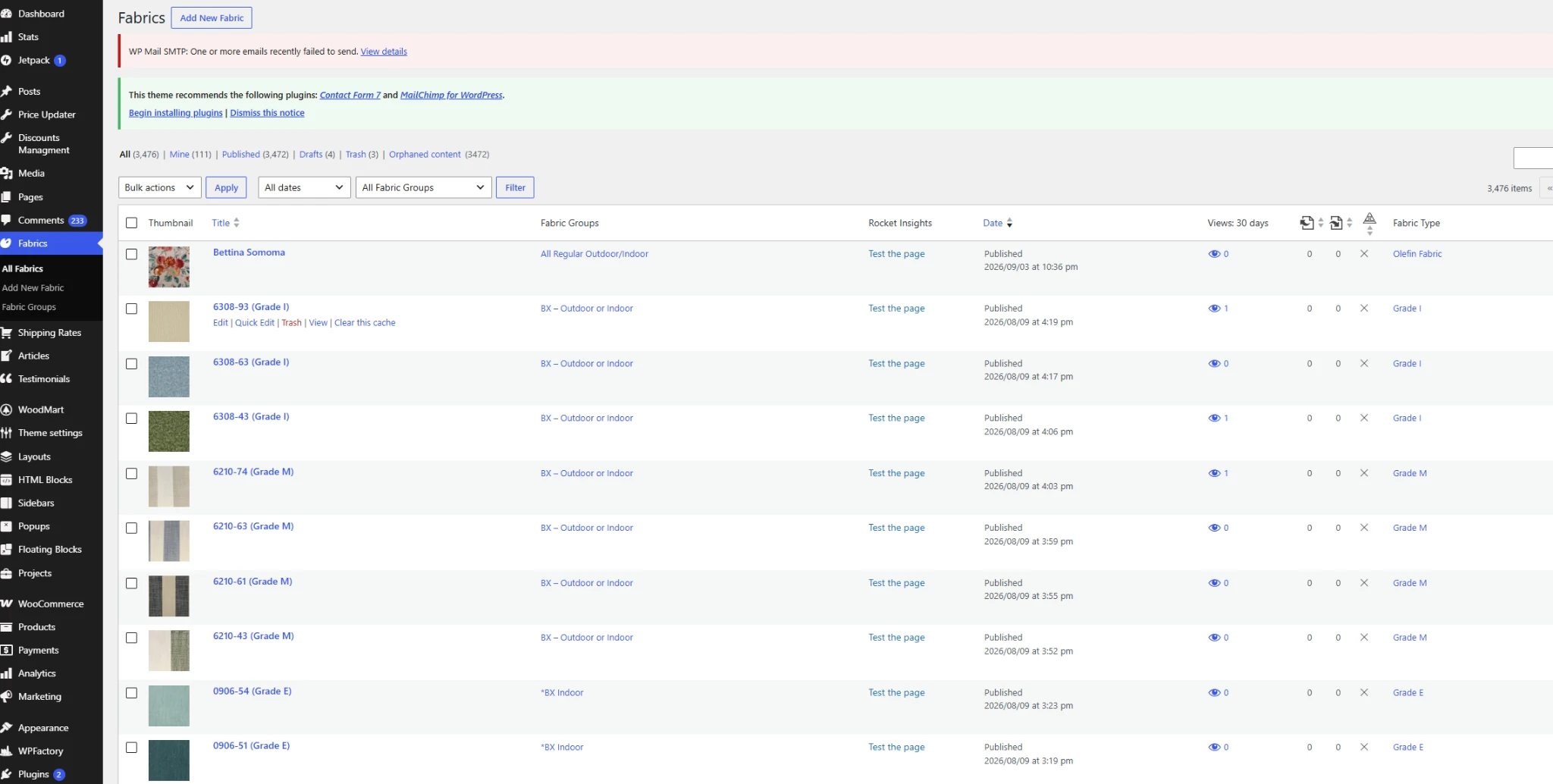
KOZY KINGDOM — FABRIC & PRICING MANAGEMENT
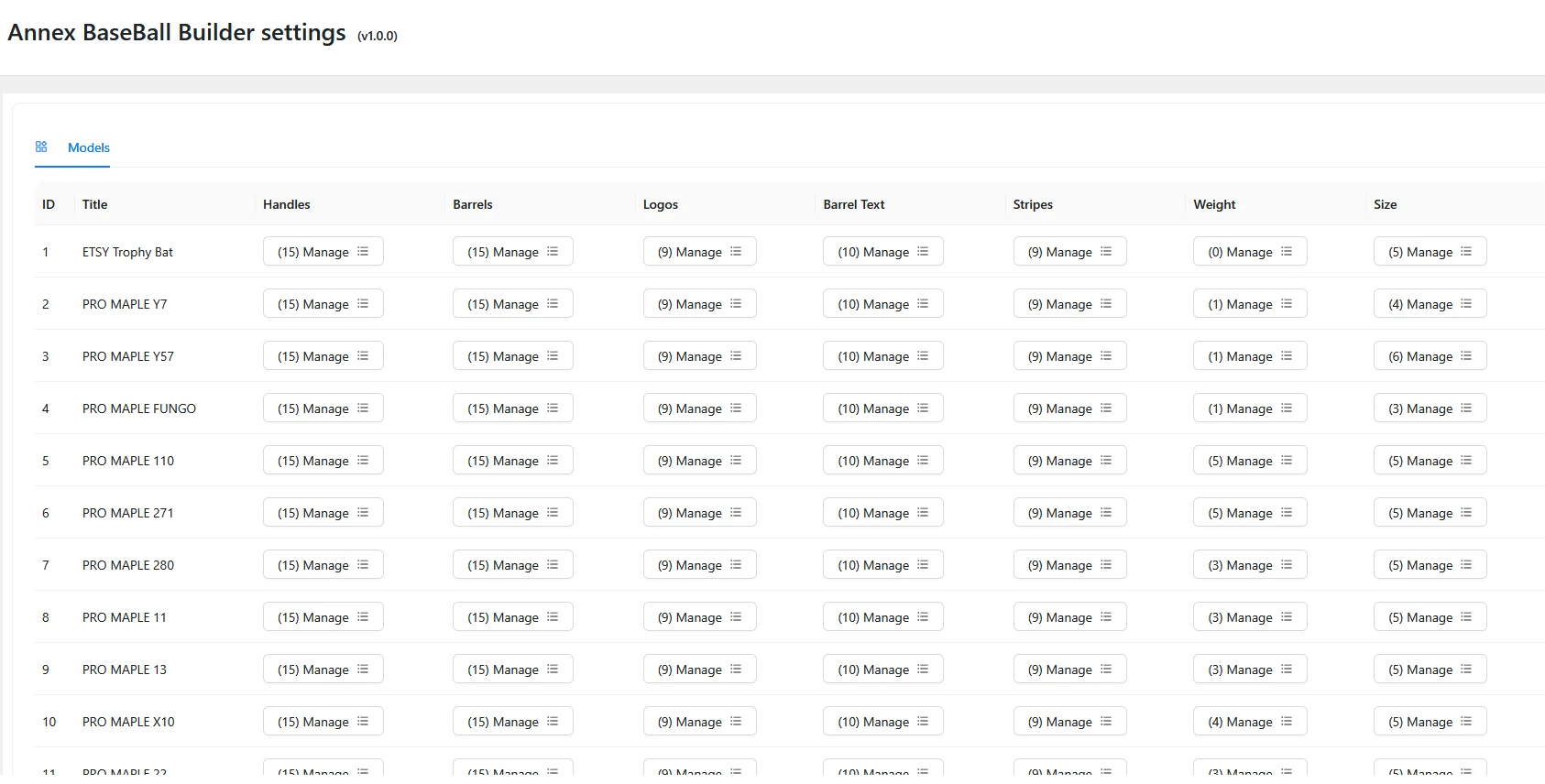
ANNEX BASEBALL — MODEL & OPTION MANAGEMENT
Configuration Data Should Survive the Entire Order
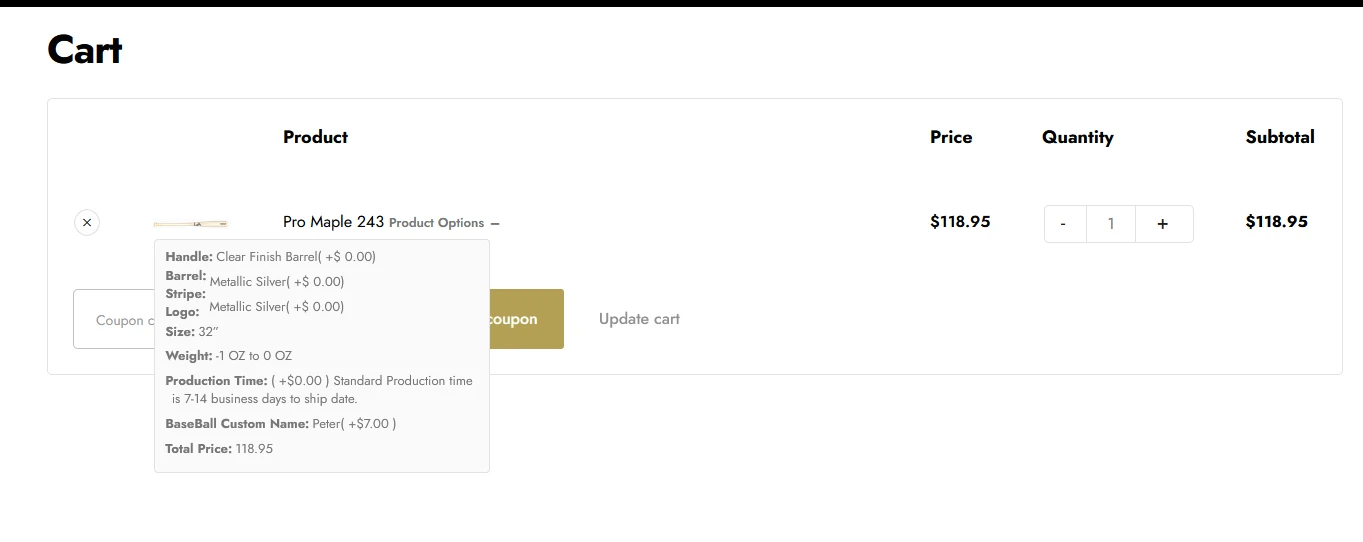
The customer’s selections should not disappear after they click Add to Cart. A robust configurator carries the chosen options into cart, checkout and order data so the customer can review what they selected and staff have the information required to fulfill the order.
Configurator
↓
Cart Summary
↓
Checkout
↓
Order / Fulfillment
Our Process
01
Map the product rules
Models, option groups, dependencies, pricing, visual requirements and invalid combinations.
02
Design the data architecture
Decide what stays native WooCommerce and what belongs in custom configuration data.
03
Design the buying experience
Organize complex choices into a clear customer flow instead of exposing backend complexity.
04
Build the configurator
Option logic, pricing, previews, validation and WooCommerce integration.
05
Build the management tools
Practical WordPress controls for staff to maintain the product logic they need.
06
Test real combinations
Pricing, visual states, cart/order data, responsiveness and edge cases before launch.
Not Every Configurable Product Needs Custom Development
If native WooCommerce variations or a well-supported extension can handle the product cleanly, that is usually the better solution. We recommend custom configurator development when the product rules, management workflow, performance requirements or customer experience genuinely justify it.
The simplest reliable architecture that fits the product.
Product Configurator FAQ
Yes. WooCommerce can remain the commerce, cart, checkout and order foundation while a custom configurator handles the product-specific option logic and customer interface.
Yes. Pricing can be calculated from selected options, upgrades, materials, patterns, sizes, add-ons or other business rules, depending on the product architecture.
Yes, when suitable product assets are available. We can build layered or state-based previews that update as customers change visual options such as colors, patterns, finishes, text or logos.
Not necessarily. For highly configurable products, a custom option/data model can often be more manageable than generating every possible combination as a conventional variation.
Yes. Product or model-specific option groups are a common requirement. The available choices can be controlled independently for each product or model.
Yes. A properly integrated configurator can preserve the selected configuration through cart, checkout and order records so customers and fulfillment staff can see what was ordered.
Yes. Where appropriate, we build WordPress admin tools so normal product, option, price and asset changes can be handled by the store team.
Yes. We can evaluate the current implementation, product data and business rules, then determine whether it is safer to extend, replace or rebuild the configurator.
Your Product Shouldn’t Be Forced Into a Generic Configuration Template
If your customers need to configure, visualize and price complex products online, we can build the WooCommerce buying experience around the product rules your business actually uses.