
CUSTOM WOOCOMMERCE PRODUCT DISCOVERY
Custom WooCommerce Product Filtering for Complex Catalogs
Standard category, price and attribute filters are enough for many stores. But complex catalogs can require discovery around measurements, specifications, compatibility, model-specific data or thousands of product variations.
SleekAlgo builds WooCommerce filtering systems around the actual structure of the catalog — including custom indexing when heavy runtime WooCommerce queries are no longer the right architecture.
Custom Filters
Product Indexing
Variation Data
Business-Specific Discovery
Performance-Conscious Architecture
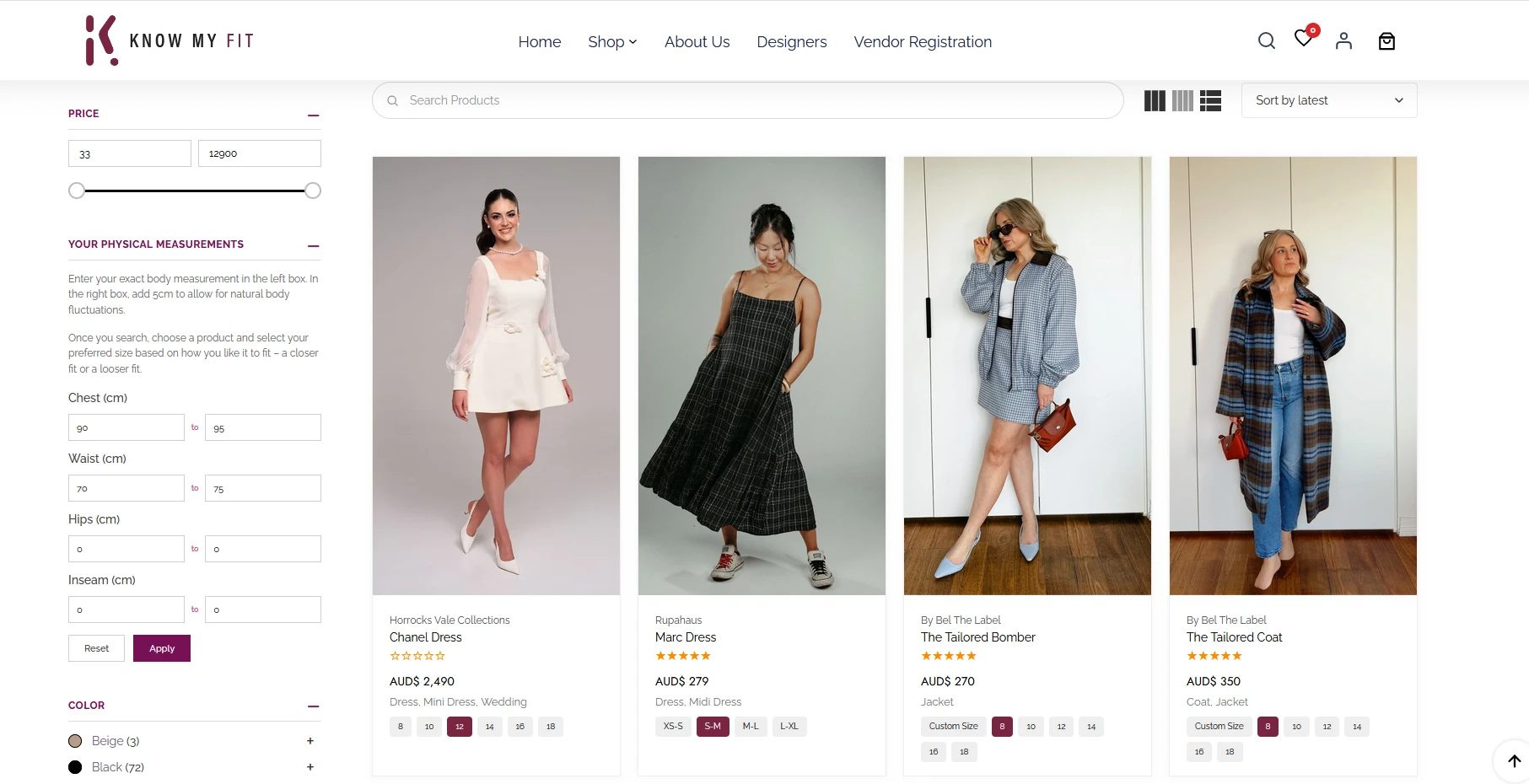
CUSTOMER-FACING DISCOVERY — MEASUREMENT FILTERS
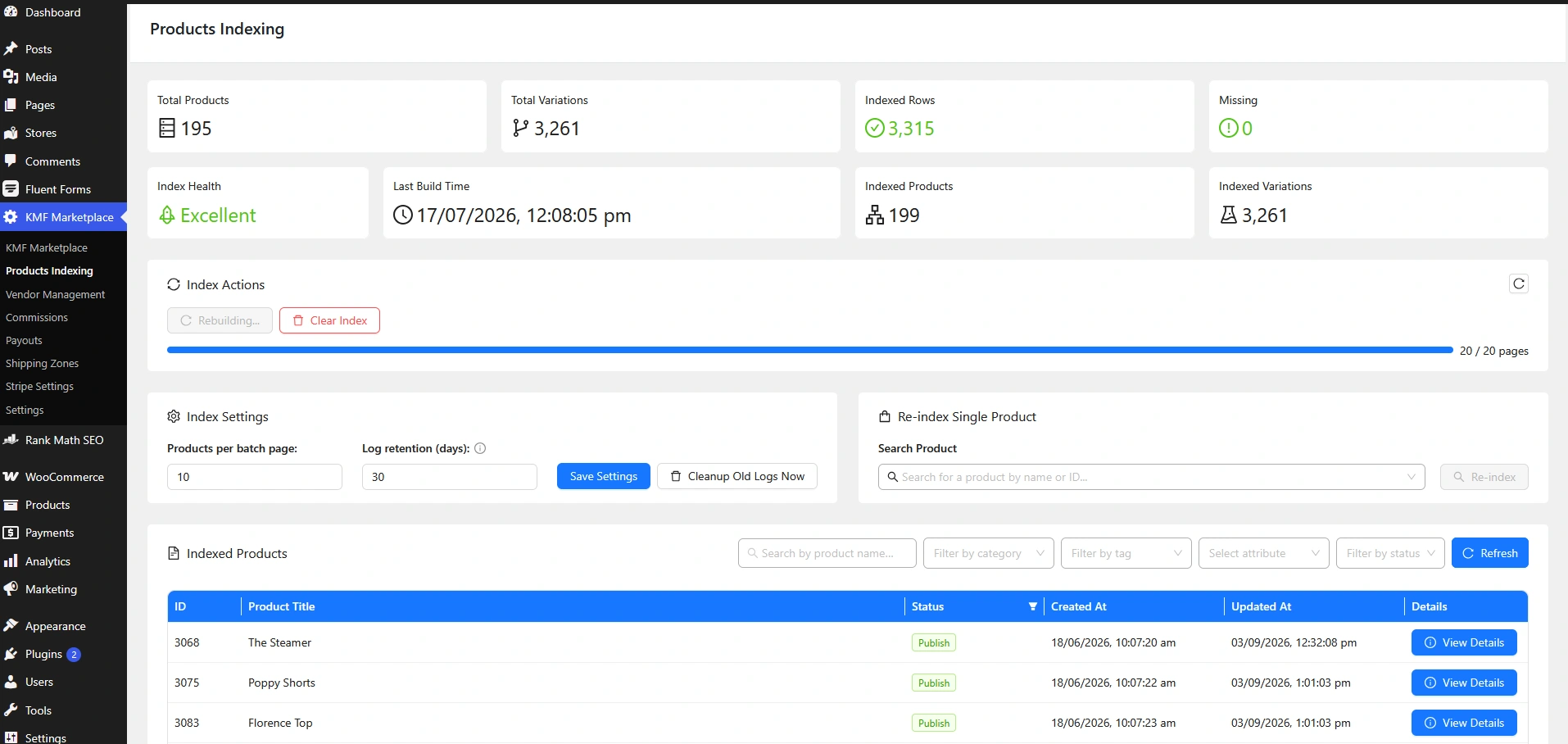
DATA ARCHITECTURE UNDERNEATH — PRODUCT INDEX
When Standard WooCommerce Filters Stop Being Enough
The answer is not automatically another filtering plugin. First understand the catalog, the data and how customers actually search it.
Thousands of Variations
Business-Specific Product Data
Dependent Filter Rules
Slow Metadata Queries
Overlapping Filter Plugins
Relevant Products Returning Zero Results
Product Discovery Starts With the Data Architecture
The custom index does not replace WooCommerce as the commerce system. It creates a purpose-built discovery layer where the catalog requires one.
WooCommerce Products + Variations
→
Structured Discovery Data → Custom Index / Lookup Layer
→
Filters / Search
→
Relevant Products
Filter Around the Data Customers Actually Care About
The filtering model should follow how customers evaluate the product — not merely which WooCommerce fields happen to exist. Presented as examples of possible discovery dimensions, not a claim every one has already been implemented.
Measurements
Size / Fit Ranges
Technical Specifications
Compatibility
Materials
Brand / Designer
Location
Availability / Operational Status
REAL PROJECT · KNOWMYFIT
KnowMyFit: Measurement-Based Shopping
Customer Measurements
→
Variation Measurement Data
→
Relevant Products
A Dedicated Index Can Separate Discovery From Heavy Runtime Queries
KnowMyFit uses a dedicated product/variation index instead of rebuilding complex WooCommerce metadata queries for every discovery request.
195
total products
3,261
total variations
3,315
indexed rows
0
missing — “Excellent”
Point-in-time KnowMyFit admin-state proof — not a permanent production total or a platform limit.
Filtering Performance Is More Than Page Speed
A fast homepage does not automatically mean a fast catalog. Product-discovery performance is its own concern.
Predictable Query Paths
Relevant Result Sets
Fast Filter Response
Stable Behavior as Data Changes
Clear Empty States
Indexes That Can Be Refreshed and Validated
The Admin Team Needs Visibility Too
Custom indexing should not become invisible infrastructure that only a developer understands.
Indexed Products / Variations
Missing Records
Index Health
Reindex Controls
Diagnostics / Processing Status
Filtering, Search and Marketplace Discovery Can Work Together
Product filters are one discovery mechanism. Business-specific systems can also support other discovery patterns — geographic discovery is one example, not a requirement for every filtering system.
PRODUCT DISCOVERY BY MEASUREMENTS
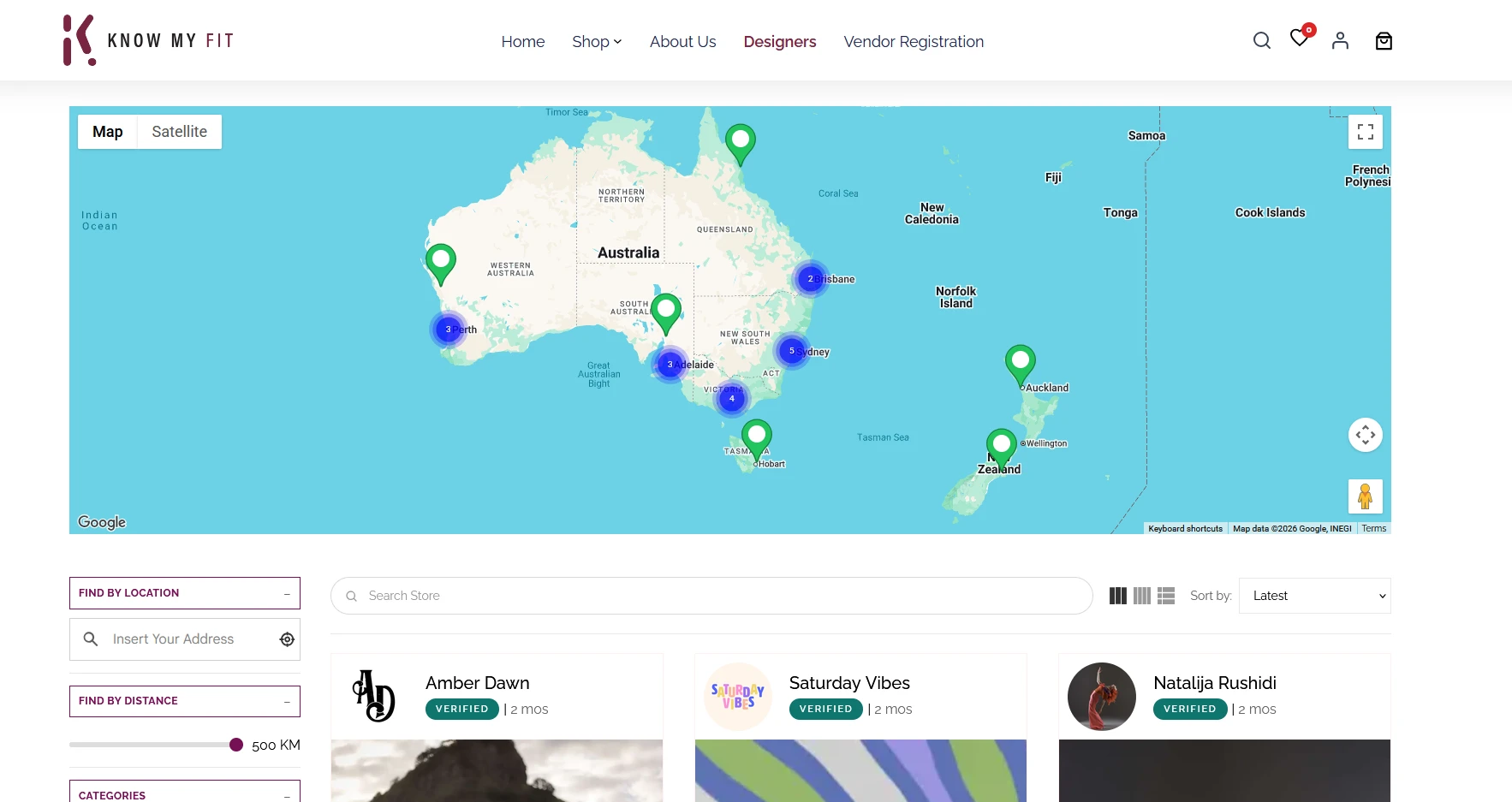
DESIGNER DISCOVERY BY GEOGRAPHY
Not Every Store Needs a Custom Index
Native WooCommerce queries or an established filtering extension may be completely appropriate for straightforward catalogs. Custom indexing should be introduced only when catalog structure, filtering logic, scale or performance genuinely justify it.
Use the simplest reliable discovery architecture that fits the catalog.
What We Can Build
Custom WooCommerce Product Filters
Variation-Level Filtering
Measurement / Range-Based Discovery
Custom Faceted Search Logic
Dedicated Product / Variation Indexes
Index Health & Admin Diagnostics
Business-Specific Product Matching
Marketplace Product Discovery
Geographic / Entity Discovery Where Relevant
Custom Filter UX
Our Process
01
Map the catalog and customer discovery journey
02
Audit product / variation data
03
Identify filter rules and query bottlenecks
04
Design discovery + indexing architecture
05
Build filtering UX + admin controls
06
Validate result accuracy, edge cases and performance
Product Filtering FAQ
Yes. Filters can be built around the product data and customer-discovery requirements when native WooCommerce or existing extensions are not a clean fit.
Yes. A custom architecture can use variation-level data where the buying/discovery logic depends on it.
Yes. KnowMyFit uses chest, waist, hips and inseam data as part of its product-discovery workflow.
A dedicated index can help when complex product/variation metadata queries become too expensive or unpredictable for the required filtering workflow. It is not necessary for every store.
Yes. The indexing workflow can be designed to refresh affected data and can include scheduled or manual reindexing controls where appropriate.
No. Performance depends on the catalog, hosting, data model, query design and frontend implementation. The architecture should be tested against the real catalog and filter combinations.
Yes. The first step should be to audit the current architecture and determine whether it can be fixed, optimized or simplified before replacing it.
Yes. The same discovery principles can apply to conventional WooCommerce stores with complex catalogs, not only multi-vendor marketplaces.
Make Complex WooCommerce Catalogs Easier to Search, Filter and Buy From
SleekAlgo builds product-discovery systems around the structure of your catalog and the way customers actually narrow down their choices.