
WOOCOMMERCE FOR FURNITURE BUSINESSES
WooCommerce Development for Furniture Stores With Complex Products
Selling furniture online gets difficult when products have fabrics, finishes, sizes, add-ons, supplier rules and shipping combinations that standard product pages were never designed to manage. SleekAlgo builds custom WooCommerce systems around the way your furniture business actually sells.
Custom Configurators
Fabrics & Finishes
Dynamic Pricing
Complex Shipping
Pricing Automation
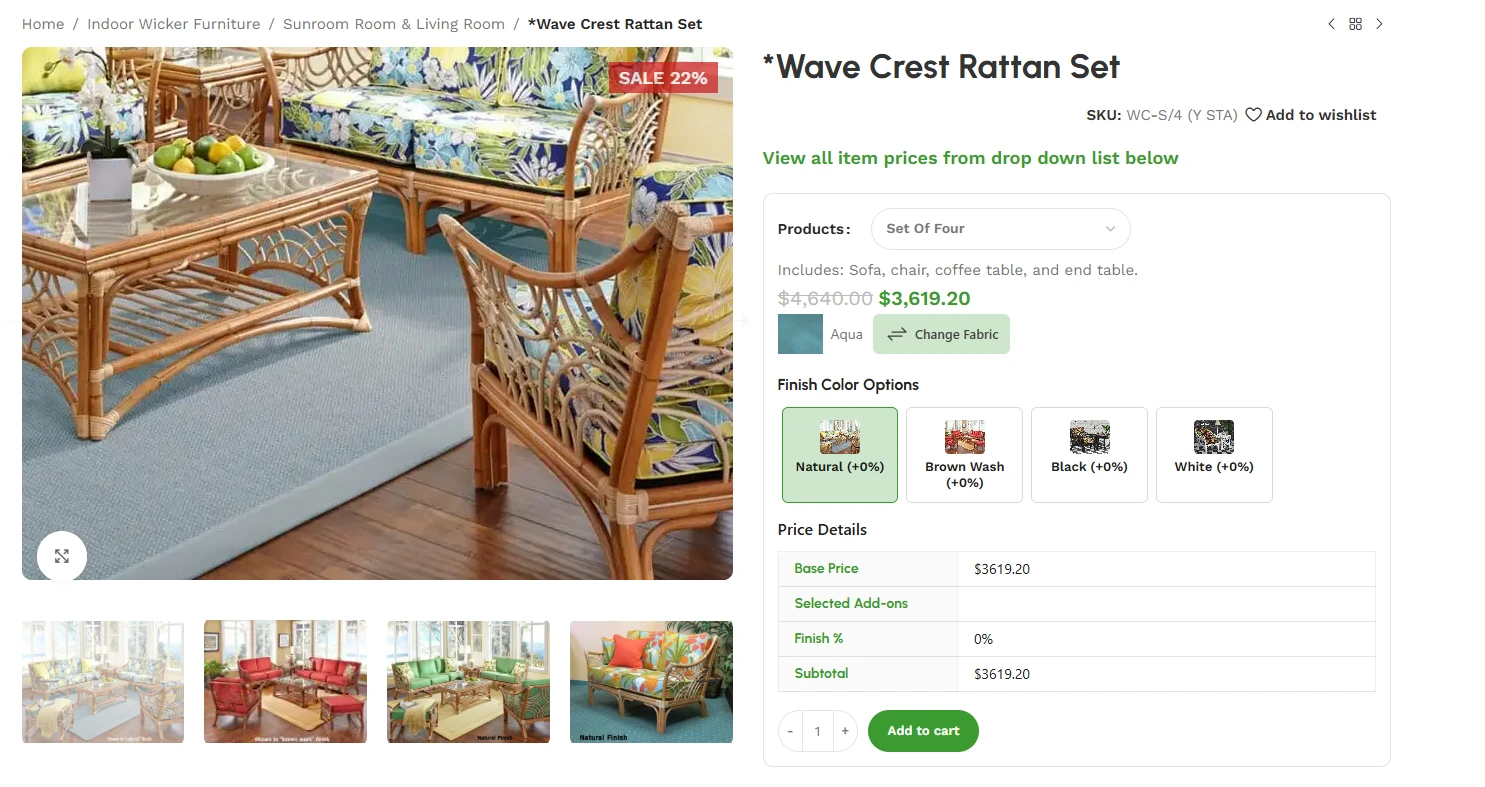
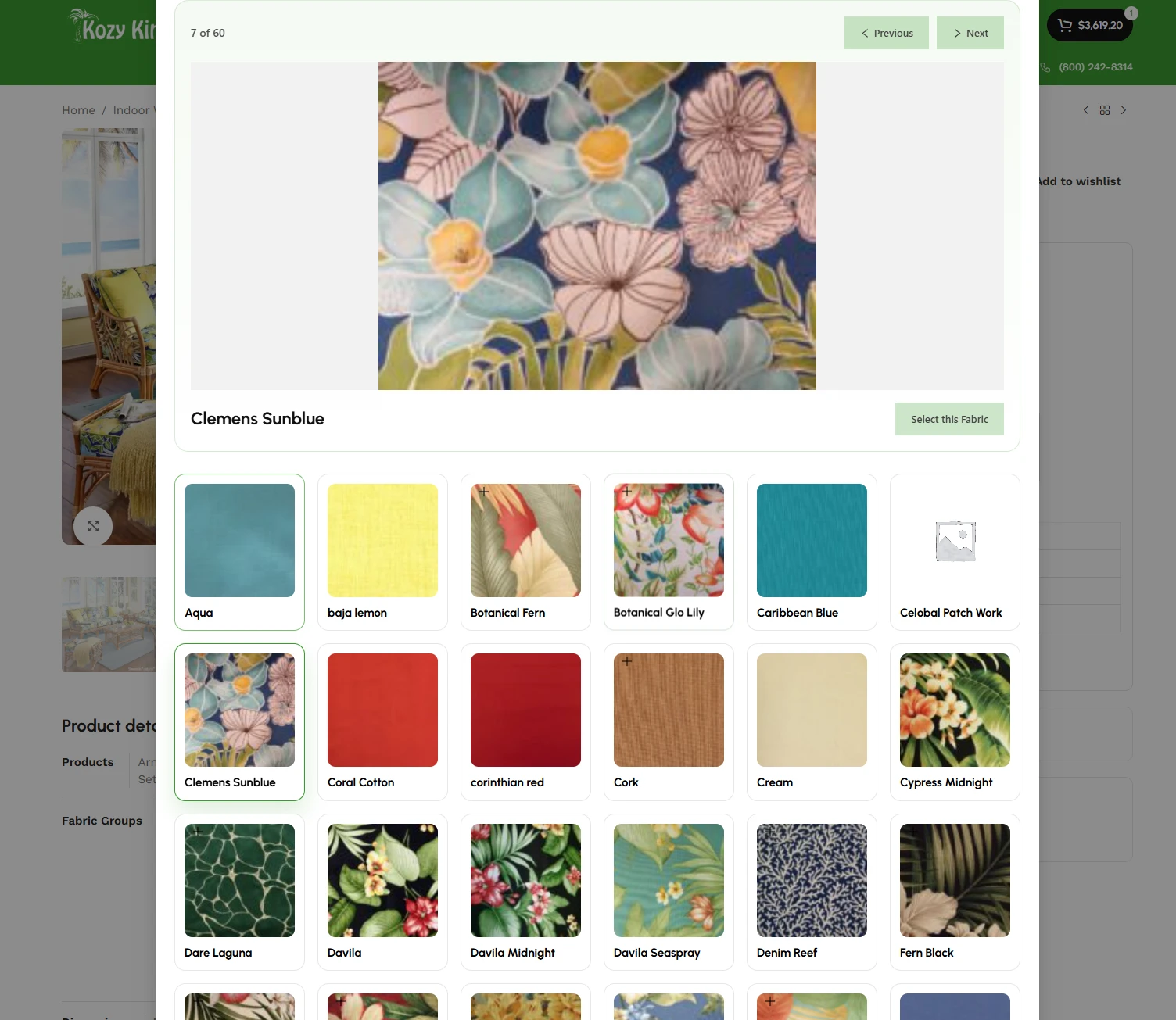
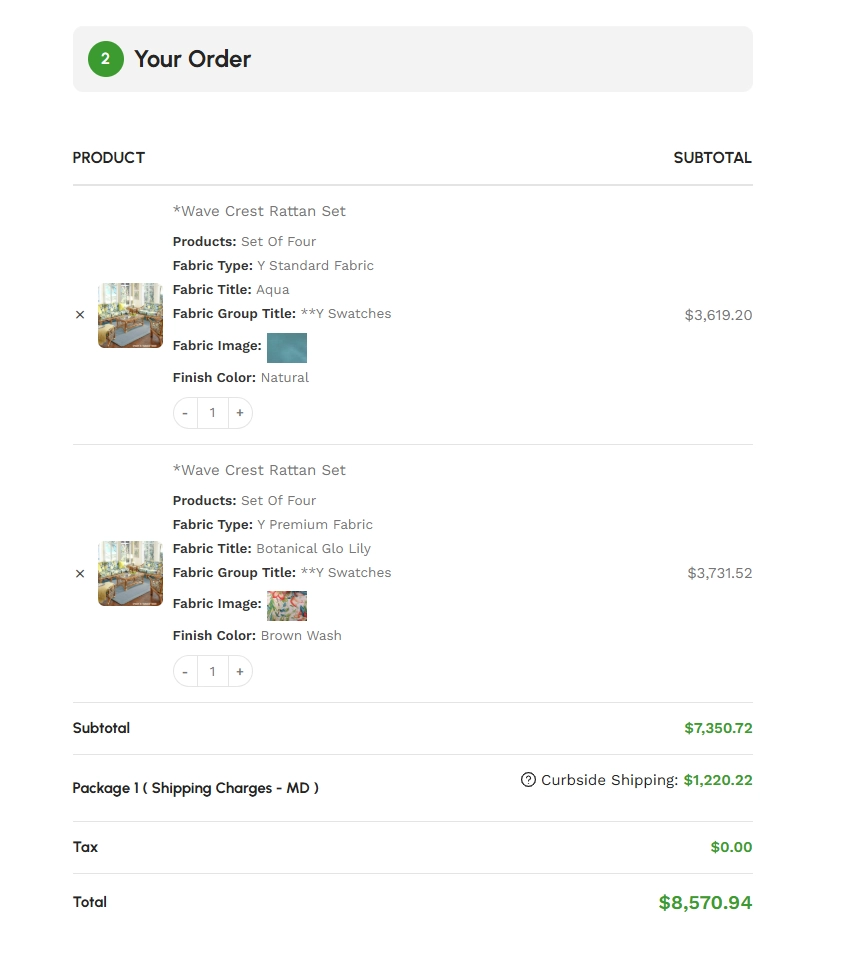
Furniture Ecommerce Gets Complex Fast
A conventional WooCommerce store works well when customers choose a size or color and every variation follows the same rules. Furniture is often different — one product may have hundreds of fabric choices, multiple finishes, optional upgrades, supplier-specific pricing and delivery rules that change based on the final configuration.
Trying to force that complexity into a stack of unrelated plugins usually creates a store that is difficult for customers to use and even harder for staff to maintain.
01
Hundreds or thousands of fabric and finish choices
02
Options that change the final price
03
Different rules for different products or suppliers
04
Home delivery, curbside and region-specific shipping logic
05
Frequent price changes that are painful to maintain manually
06
Legacy product data that needs to be normalized or migrated
Built Around Your Product Rules — Not Plugin Limits
We design the product experience and backend around the actual buying logic of your furniture business.
Product
→
Available Options
→
Customer Configuration
→
Dynamic Price
↓
Cart / Order
Fabric
Finish
Wood
Size
Add-ons
Supplier Rules
Shipping
Pricing Rules
WooCommerce remains the commerce foundation. Custom engineering handles the complexity unique to the furniture business.
Why Standard Variable Products Often Aren’t Enough
STANDARD APPROACH
Thousands of Conventional Variations
Every fabric/finish/size combination becomes its own WooCommerce variation — quickly exceeding what is practical to manage or maintain.
PURPOSE-BUILT APPROACH
Custom Product Configuration
Custom option data, purpose-built interfaces and pricing logic — while WooCommerce still handles cart, checkout and orders.
WooCommerce is strong as the commerce engine. Complex product logic sometimes needs a custom layer on top of it — this gives customers a cleaner buying experience and gives the store team a system designed around how products are really configured and maintained.
REAL FURNITURE ECOMMERCE PROJECT
Turning Complex Custom Furniture Into a Manageable WooCommerce Buying Experience
Kozy Kingdom sells configurable rattan furniture. Before the ecommerce build, the website could show products and fabrics, but customers could not complete the complex customization and purchasing process online.
SleekAlgo built the WooCommerce store and a custom product configurator that lets customers select product options, fabrics, finishes and add-ons while the system applies the relevant pricing and carries the configuration into the order.
3,476
fabric records captured in the custom fabric-management interface
~50
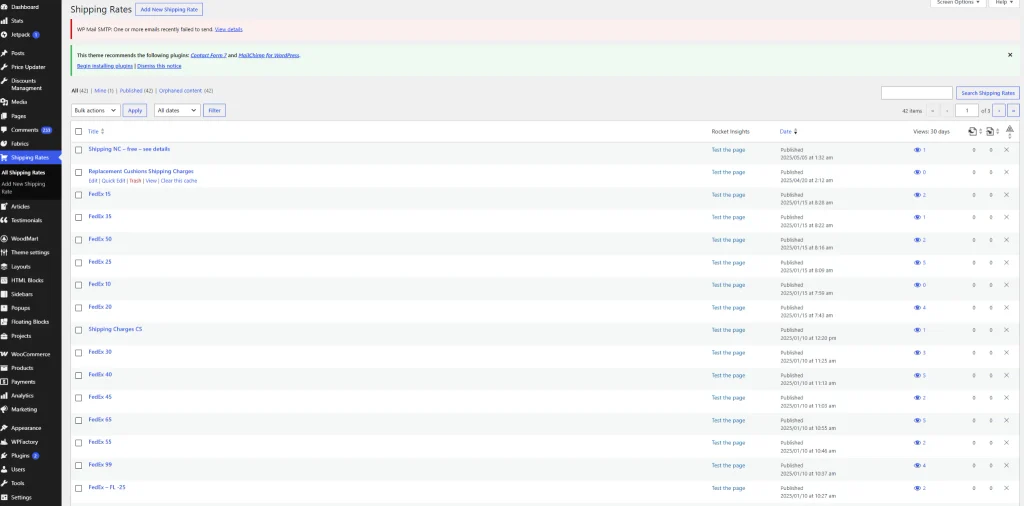
active shipping-charge scenarios in the captured configuration
Custom
pricing workflow connected to Google Sheets for large-scale price maintenance
Live
store receiving customized furniture orders, configuration retained through cart/order
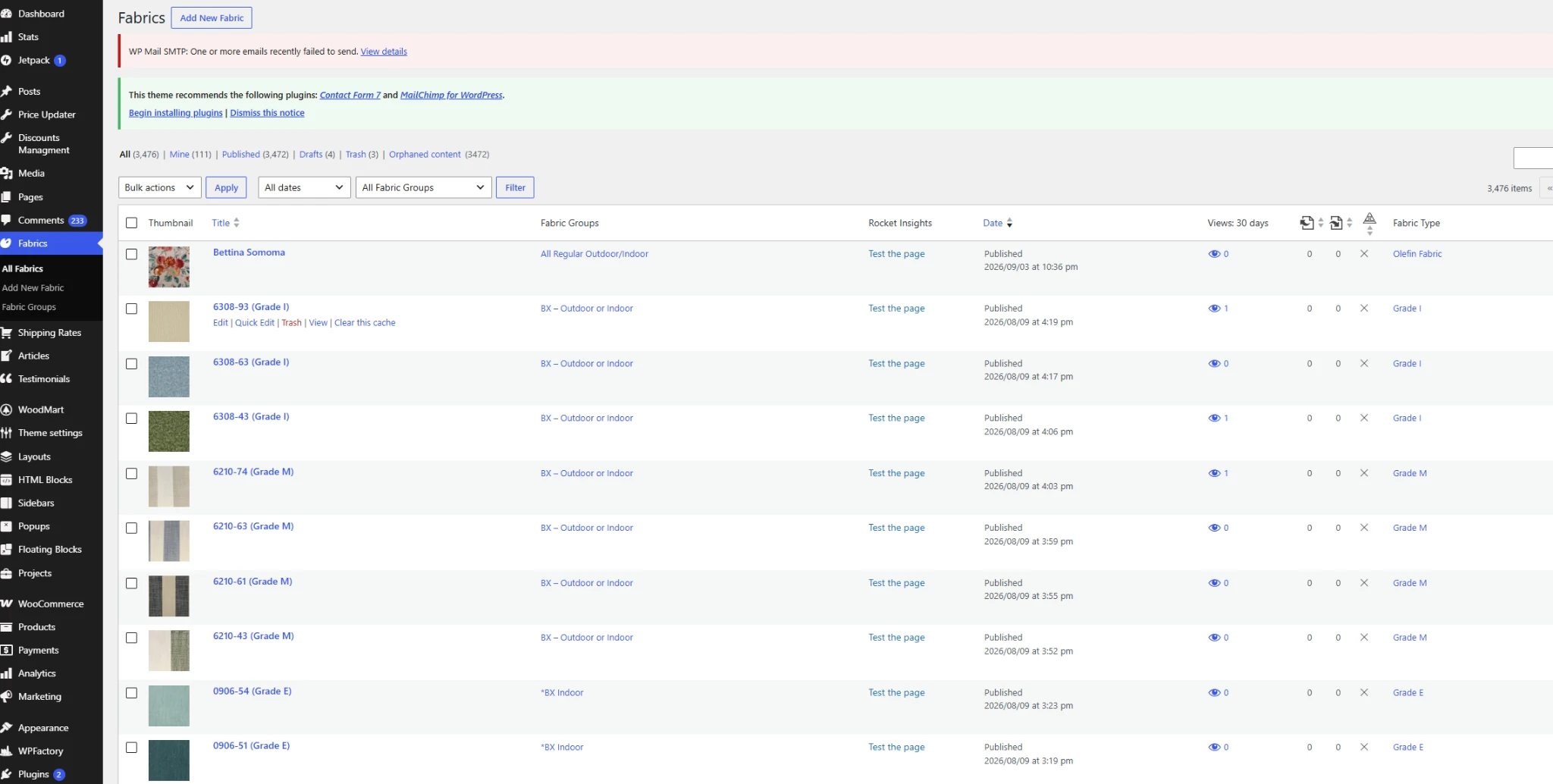
Pricing Maintenance Shouldn’t Become a Full-Time Job
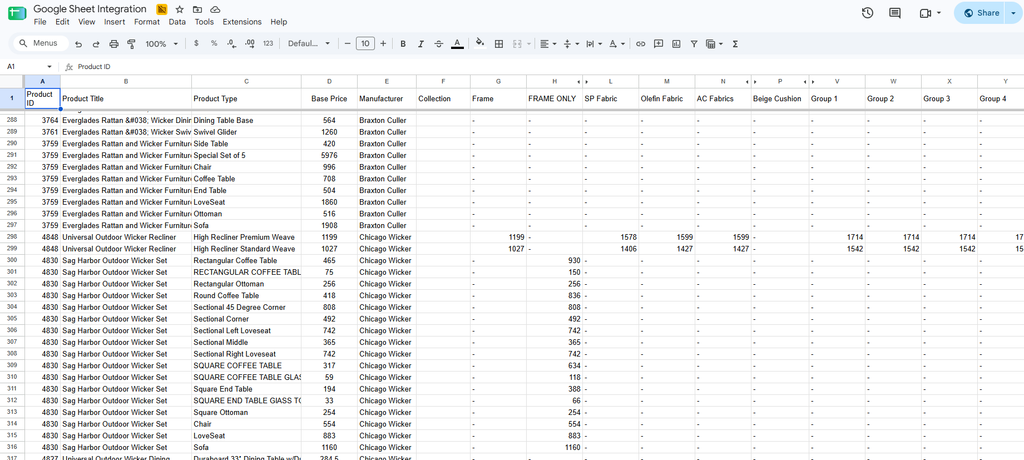
For Kozy Kingdom, we created a custom Price Updater workflow that maps WooCommerce product data into a Google Sheet, lets the business update pricing in bulk, and then imports those changes back into WordPress. The exact workflow for another store may differ, but the principle is the same: the operational system should make the catalog easier to run, not only easier to buy from.
THE WORKFLOW
WooCommerce Products
↓
Mapped Pricing Sheet
↓
Bulk Updates
↓
Import Back Into WordPress
Shipping Logic Can Be as Important as Product Logic
Furniture shipping rarely behaves like a flat-rate parcel store. Delivery may vary by supplier, product type, destination and delivery method. A custom WooCommerce build can model those rules without forcing staff to manually correct orders after checkout.
Supplier
Product
Destination
Delivery Method
Complex rules behind the scenes. Straightforward checkout for the customer.
Our Process
01
Map the buying rules
Document how products, fabrics, pricing, shipping and workflows actually work.
02
Design the architecture
Decide what stays native WooCommerce and what needs custom engineering.
03
Build the customer experience
Designed around clear buying decisions, not backend data structures.
04
Build the management workflow
Staff maintain products, options and pricing without developer involvement.
05
Migrate and validate
Existing catalog data is normalized, migrated and tested against real scenarios.
06
Optimize and launch
Test responsive behavior, checkout, performance and edge cases before launch.
Not Every Furniture Store Needs a Custom Configurator
If your products are straightforward, native WooCommerce may already be enough. We only recommend custom engineering when the product, pricing, shipping or management requirements justify it.
The simplest architecture that can reliably handle the business.
WooCommerce for Furniture Stores FAQ
Yes. WooCommerce can remain the commerce foundation while custom product logic handles complex fabrics, finishes, pricing, add-ons and configuration rules that would be difficult to maintain as standard variations.
Yes. Depending on the available product imagery and requirements, we can build selectors and visual previews that update as customers choose fabrics, finishes or other options.
Yes. Custom pricing rules can update the final price based on selected product options, upgrades or other business rules.
Yes. Shipping can be engineered around factors such as supplier, destination, product type and delivery method when standard WooCommerce rules are not sufficient.
Yes. Where appropriate, we can build bulk-management workflows such as spreadsheet-based pricing updates or custom admin tools.
Yes. We can migrate and normalize product, option and related catalog data. The migration approach depends on the structure and quality of the source data.
No. SleekAlgo builds custom WooCommerce systems for many kinds of businesses. This page focuses specifically on the recurring product, pricing and shipping challenges we see in furniture ecommerce.
START THE CONVERSATION
Your Furniture Store Shouldn’t Be Limited by Generic Ecommerce Rules
We work remotely with furniture businesses to map fabrics, finishes, pricing and delivery rules before development. Share representative products and fulfillment scenarios so we can plan a WooCommerce system around the way your store operates.