
CUSTOM WOOCOMMERCE PRICING & SHIPPING
Custom WooCommerce Pricing & Shipping for Complex Products
Some WooCommerce stores cannot be reduced to one product price and one shipping table. The final amount may depend on selected options, materials, finishes, add-ons, supplier, destination and delivery method.
SleekAlgo builds pricing and shipping systems around the actual operational rules of the business while keeping the customer experience clear and the backend manageable.
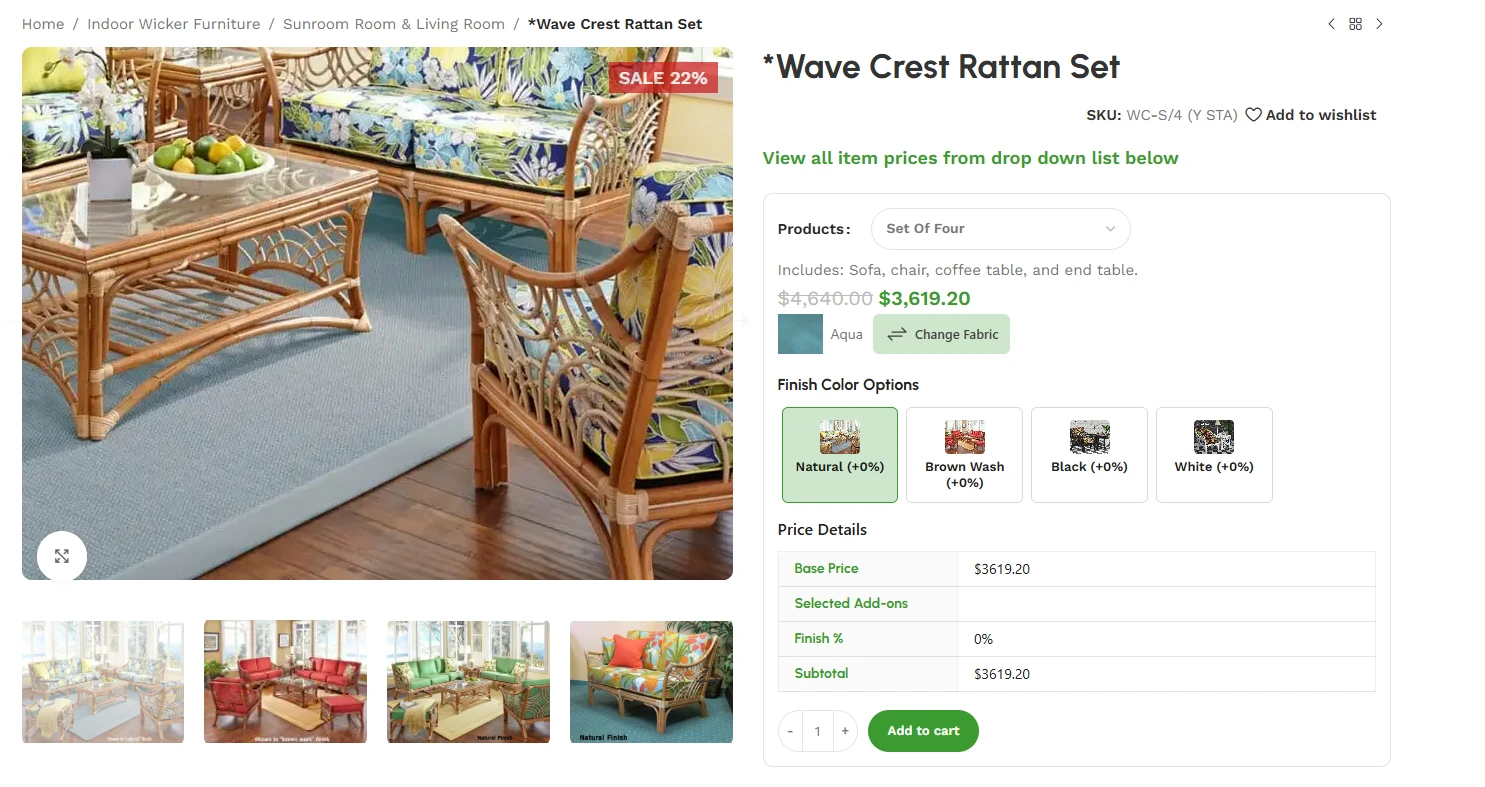
CUSTOMER-FACING · PRICE FOLLOWS THE CONFIGURATION
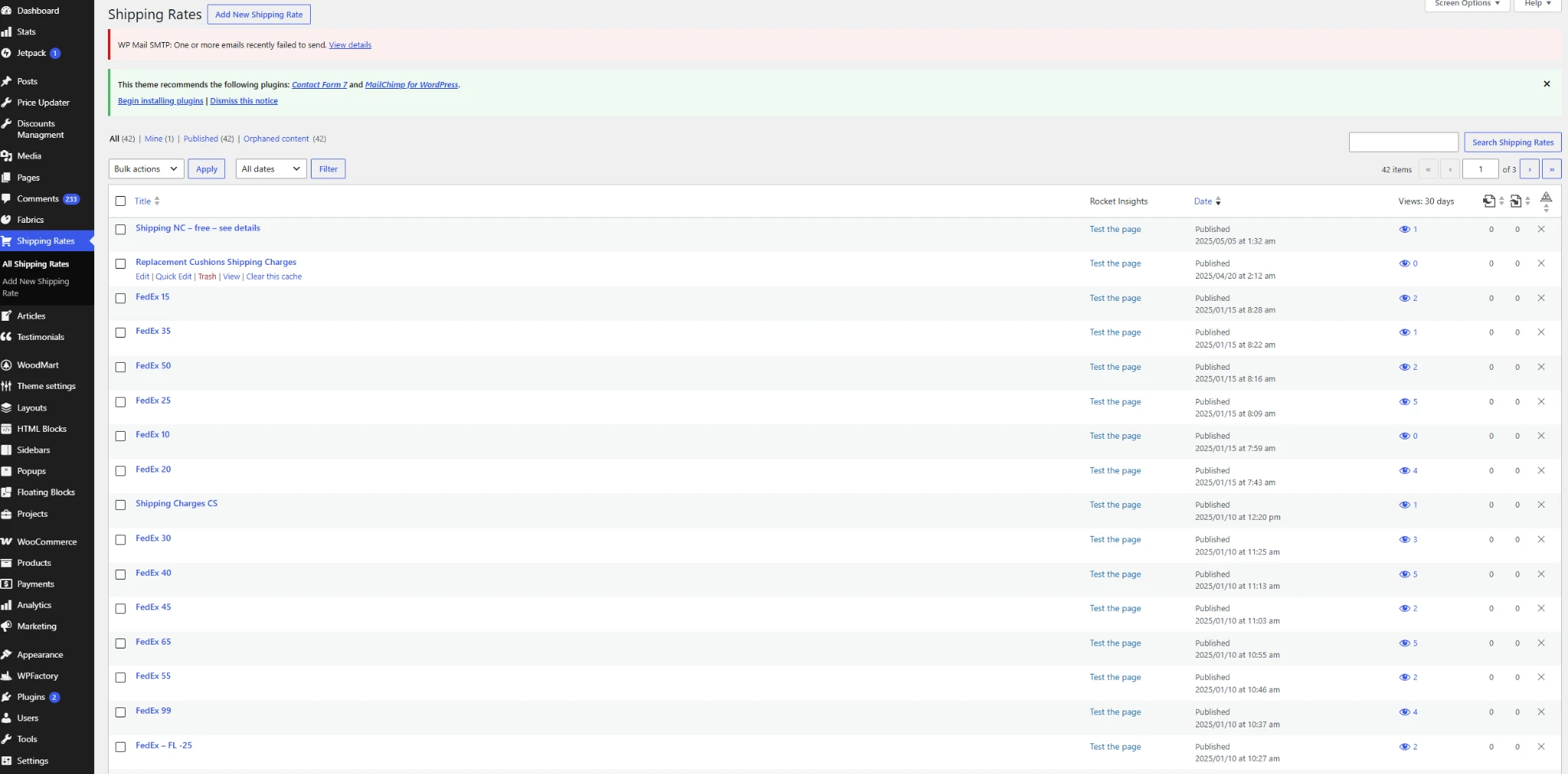
OPERATIONAL LOGIC UNDERNEATH · SHIPPING RULES
Dynamic Pricing
·
Option-Based Pricing
·
Supplier Rules
·
Regional Shipping
·
Delivery Methods
·
Bulk Price Updates
When Pricing and Shipping Become Business Logic
Once options, suppliers and delivery methods all influence the final amount, pricing and shipping stop being settings and become rules the business depends on.
02
Materials / Fabrics Carry Premiums
Some choices cost more to source or produce.
03
Supplier-Specific Shipping
Different suppliers ship on different terms.
04
Regional Delivery Rules
Cost and availability vary by destination.
05
Home vs. Curbside
Delivery method changes both the service and the charge.
06
Frequent Catalog Price Changes
Supplier pricing moves and the catalog has to follow.
The objective is not to force every rule into a generic plugin. It is to model the business cleanly enough that customers and staff can rely on it.
PRICING ARCHITECTURE
Pricing Should Follow the Configuration
The calculated price is derived from the customer’s selections through defined pricing rules, not stored as a separate product for every combination.
01
Base Product
02
Customer Options
03
Pricing Rules
04
Calculated Product Price
05
Cart / Order
PRICING INPUTS · EACH FEEDS THE PRICING RULES → CALCULATED PRICE
Product / Model
Material / Fabric
Finish
Size
Add-ons
Premium Components
Production Options
SHIPPING ARCHITECTURE
Shipping Should Follow the Fulfillment Reality
Shipping is calculated from who fulfils the order, where it is going and how it will be delivered.
Product / Supplier
Destination
Delivery Method
→
EVALUATED
Shipping Rule
→
RESULT
Customer Charge
EXAMPLE RULE TYPES
Supplier-Specific Rules
Product-Specific Charges
Regional Rules
Home Delivery
Curbside Delivery
Conditional Methods
The checkout experience can remain simple even when the operational shipping rules are complex.
REAL PROJECT PROOF · KOZY KINGDOM
Complex Furniture Pricing & Shipping in WooCommerce
Kozy Kingdom’s prices depend on product type, fabric, finish and add-ons, and its shipping depends on supplier and delivery method. Both are modelled in WooCommerce and carried through to the order.
3,476
fabric records
~50
active shipping-charge scenarios
Custom
Google Sheets pricing workflow
Figures reflect the captured Kozy Kingdom project state — not system limits.
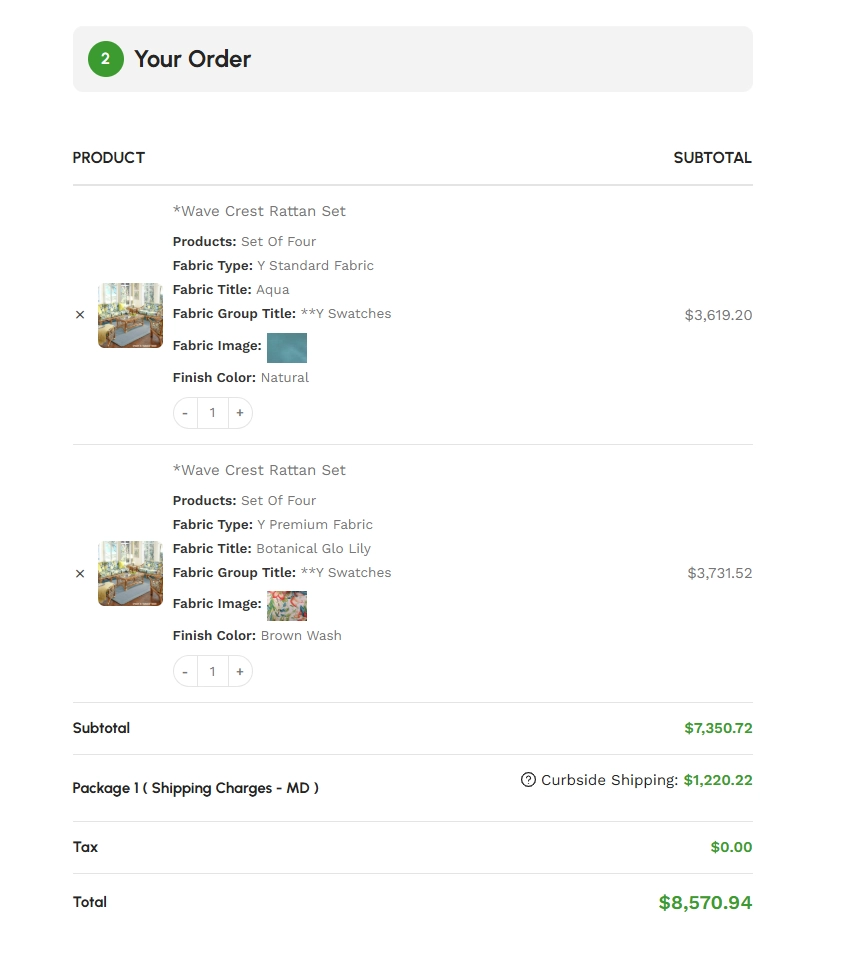
CONFIGURATION + PRICE RETAINED INTO CART / ORDER
SUPPLIER · HOME / CURBSIDE SHIPPING RULES
Product type / set affects price
Fabric affects price
Finishes + add-ons affect price
Supplier-specific shipping
Home vs. curbside delivery
Configuration retained into cart/order
OPERATIONAL MAINTENANCE
Bulk Price Maintenance Shouldn’t Become Manual Data Entry
Kozy Kingdom’s catalog prices are maintained in a mapped Google Sheet and synced back to WordPress, rather than edited product by product.
01
WooCommerce Catalog
02
Product Mapping / Pricing Sheet
03
Bulk Updates
04
Import / Sync Back to WordPress
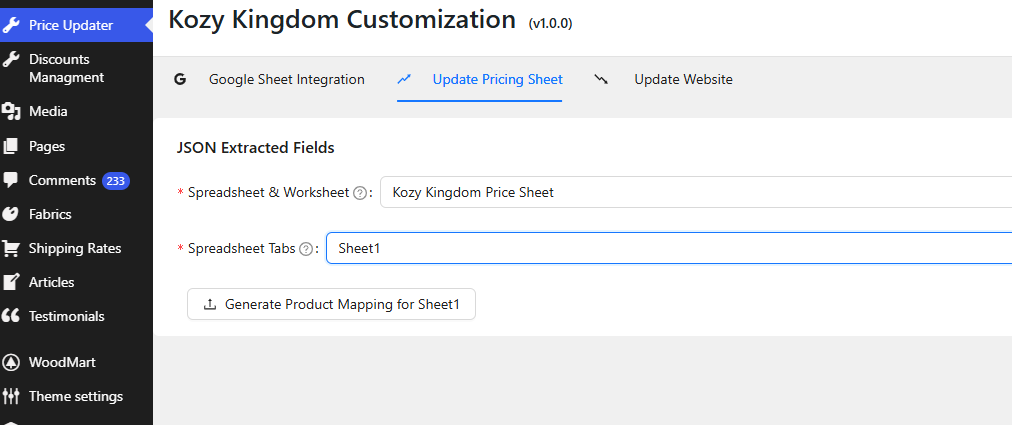
01 · GENERATE PRODUCT MAPPING
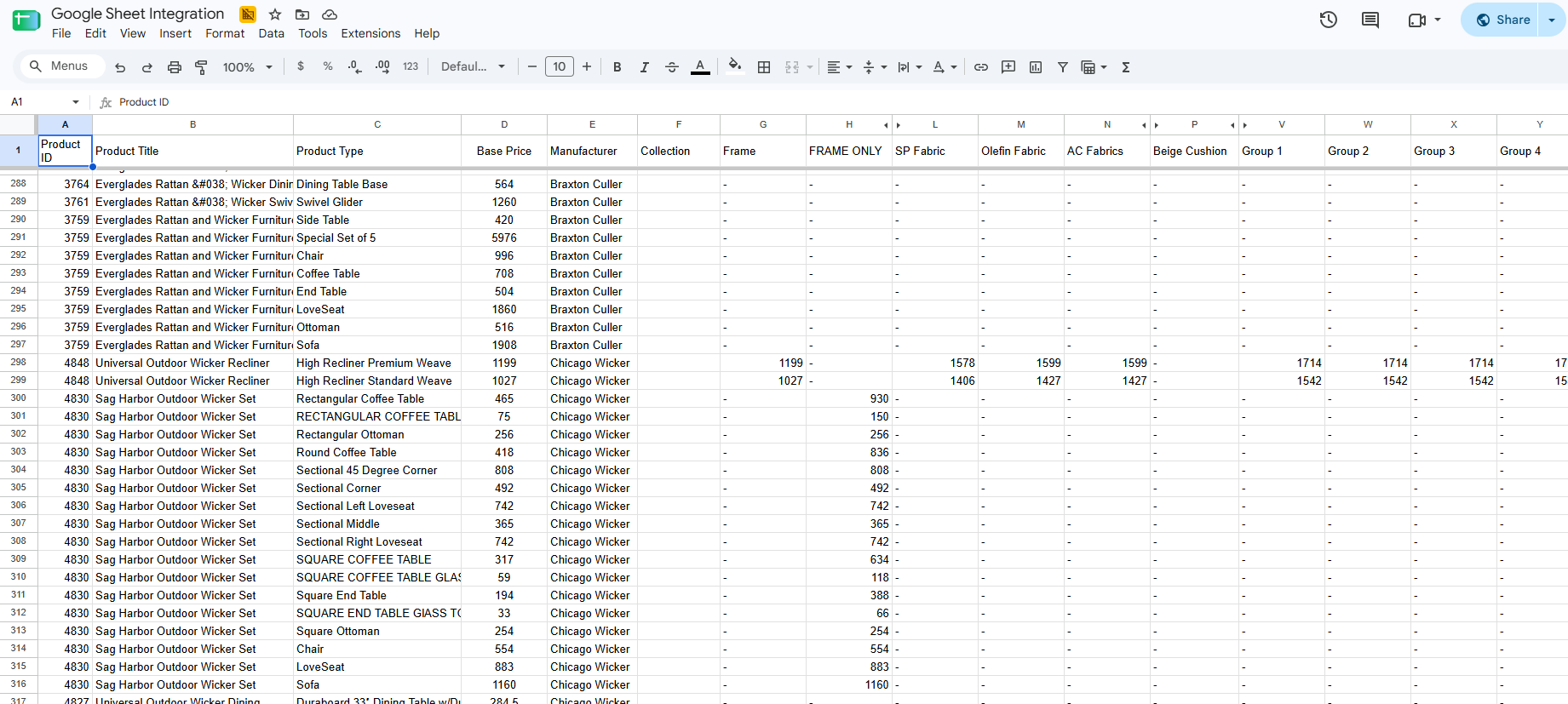
02–03 · BULK UPDATES IN THE PRICING SHEET
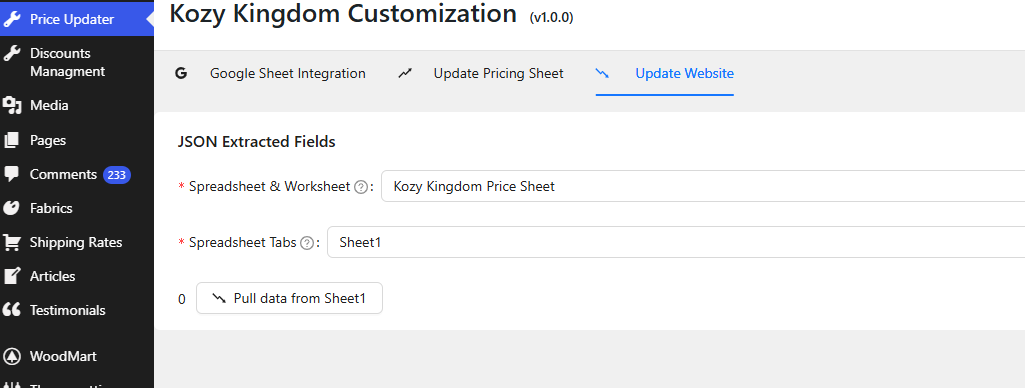
04 · SYNC BACK TO WORDPRESS
Good WooCommerce engineering should improve the staff workflow, not only the storefront.
Complex Rules Need Clear Admin Controls
The business should be able to operate the system after launch without needing a developer for routine changes.
Option Prices
Supplier Mappings
Shipping Scenarios
Delivery Methods
Product / Fabric Mapping
Bulk Updates
Rule Priority
SHIPPING SCENARIOS · MANAGED IN WORDPRESS
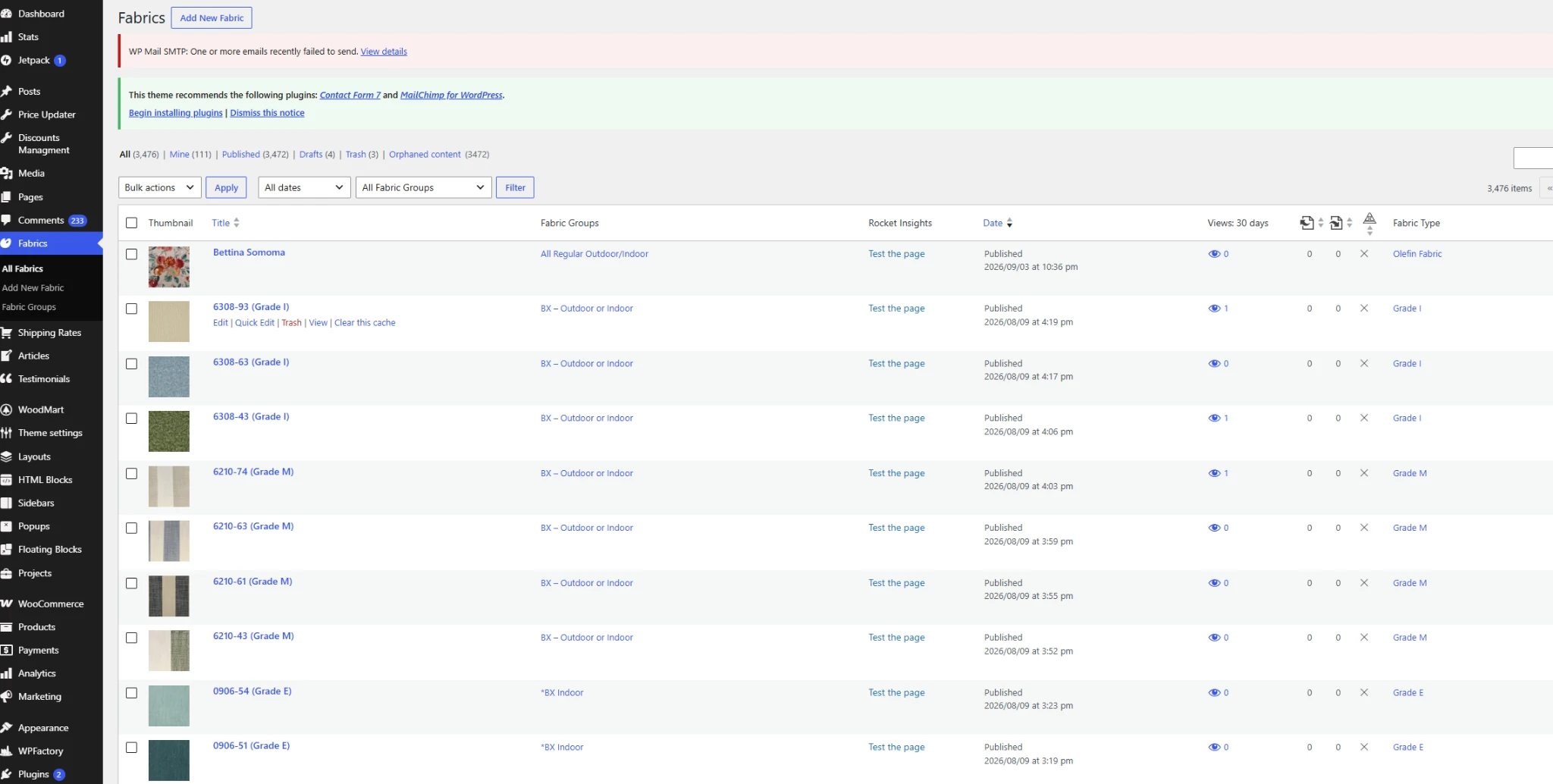
STRUCTURED ADMIN · FABRIC MANAGEMENT
Complex Rules Behind the Scenes. Straightforward Checkout for the Customer.
The customer should not need to understand the rule engine to buy the product.
01
Choose Product
02
Configure Options
03
See Updated Price
04
Enter Destination
05
See Valid Delivery Choices
06
Checkout
Pricing and Shipping Data Should Survive Into the Order
Relevant configuration and fulfillment selections are retained in WooCommerce cart and order data so staff can process the order correctly.
01
Product Configuration
02
Calculated Price
03
Cart
04
Shipping Selection
05
Order / Fulfillment
REAL PROOF · CONFIGURATION CARRIED INTO THE CART
OUR APPROACH
Not Every Complex Store Needs Fully Custom Pricing & Shipping
WooCommerce core, a proven extension or a small amount of custom logic may be enough for many stores.
Custom development becomes justified when business rules cannot be represented cleanly, multiple extensions overlap, or maintenance becomes fragile.
Use the simplest reliable architecture that accurately models the business.
What We Can Build
Option-Based WooCommerce Pricing
Dynamic Product Pricing
Supplier-Specific Shipping
Product / Category Shipping Rules
Regional Delivery Logic
Delivery-Method Pricing
Bulk Price Updates
Google Sheets Pricing Integrations
Custom Pricing / Shipping Admin Controls
Cart & Order Configuration Data
How We Approach It
01
Map product, pricing and shipping rules
02
Identify where the existing architecture breaks down
03
Design the data and rule architecture
04
Build customer-facing pricing / delivery behavior
05
Build manageable backend controls
06
Test real product, destination and fulfillment scenarios
Pricing & Shipping FAQ
Yes. Custom logic can calculate pricing from selected product options when standard variations or existing extensions are not a clean fit.
Yes. Shipping rules can incorporate supplier or fulfillment-source logic when the business requires it.
Yes. The rule architecture can consider product data, region, destination and delivery method where required.
Yes. Kozy Kingdom is direct proof of a workflow where delivery method is part of the shipping logic.
Yes. Kozy Kingdom uses a custom Google Sheets pricing workflow so catalog prices can be managed outside one-by-one product editing.
No. WooCommerce core or established extensions should be used when they model the rules reliably. Custom engineering is justified only when the business requirements exceed those tools.
Yes. Relevant configuration and fulfillment selections can be retained in WooCommerce cart/order data so staff can process the order correctly.
Yes. The first step should be to audit the existing rules and determine whether they can be simplified, repaired or consolidated before rebuilding them.
Make WooCommerce Match the Way Your Products Are Actually Priced and Delivered
SleekAlgo builds pricing and shipping systems around complex product, supplier and fulfillment rules while keeping the buying and admin experience manageable.