FASHION MARKETPLACE DEVELOPMENT
Fashion Marketplace Development for Independent Designers & Brands
A fashion marketplace has to work for two audiences at once: customers trying to discover products that fit their needs, and designers or brands managing products, orders, commissions and payouts. SleekAlgo builds custom WooCommerce marketplace platforms around both sides of that business.
Fit-Based Discovery
Designer Onboarding
Vendor Management
Commissions & Payouts
Regional Shipping

A Fashion Marketplace Is More Than a Product Grid
A multi-brand fashion platform has to coordinate customer discovery and seller operations at the same time. As the marketplace grows, generic marketplace plugins can become a constraint when the business needs more control over fit, vendors, payments, shipping or performance.
CUSTOMERS
Product discovery
Fit / measurements
Designer discovery
Checkout
DESIGNERS / BRANDS
Onboarding
Products
Commissions
Payouts
Marketplace operations
The platform has to work for both sides of the marketplace.
Built Around the Fashion Marketplace Journey
The marketplace architecture should support how customers shop and how designers operate — not force either side into a generic multi-vendor plugin’s assumptions.
Discover Designers / Products
→
Evaluate Fit
→
Purchase
→
Order
→
Vendor / Marketplace Operations
Supporting platform layer:
Product Data
Search & Filters
Vendors
Commissions
Payouts
Shipping
Marketplace Admin
KNOWMYFIT DIRECT PROOF
Fit Can Be Part of Product Discovery
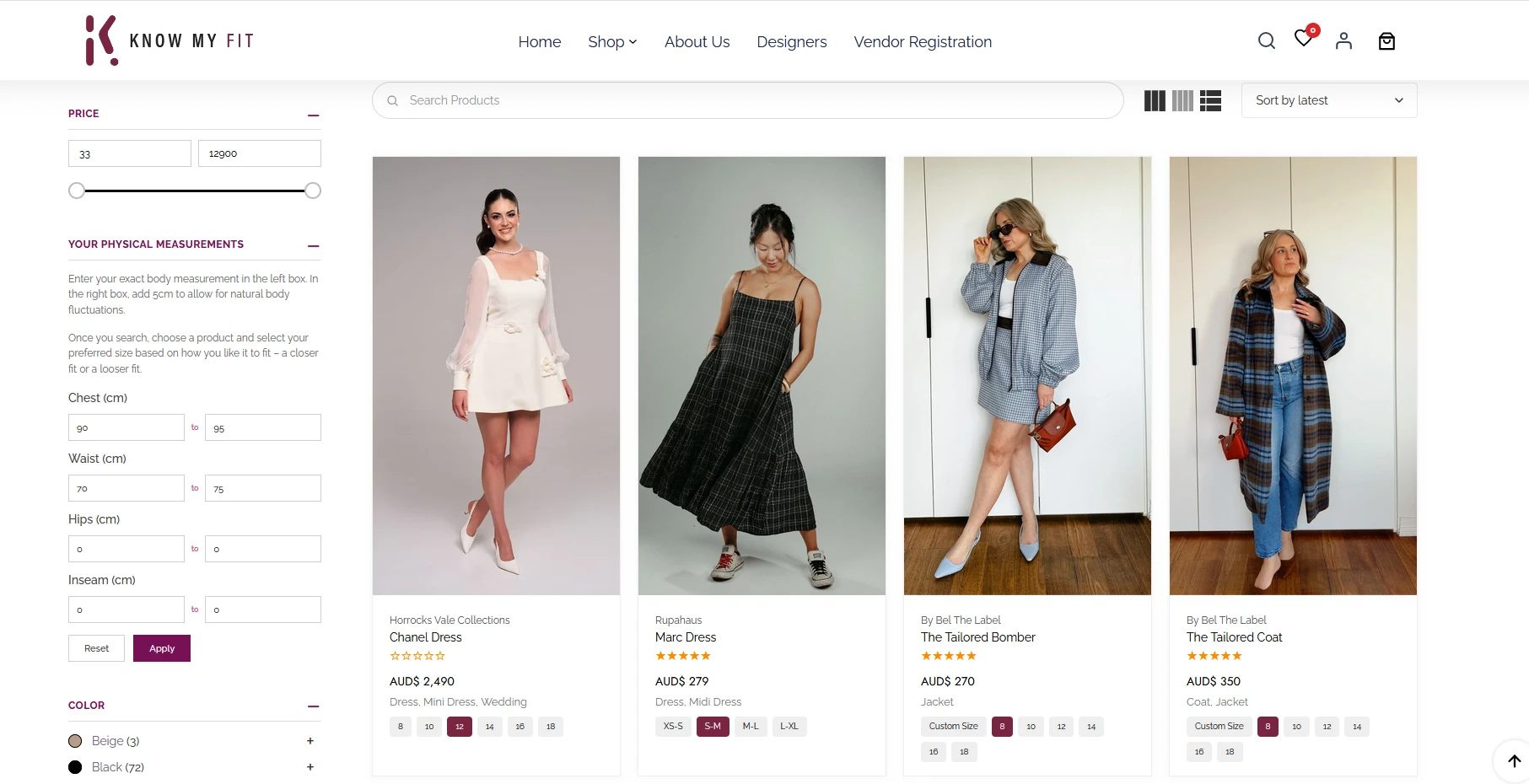
Fashion discovery can require more than category, colour and price filters. When the business model depends on physical fit, the product data and filtering architecture must support it properly. In KnowMyFit, chest, waist, hips and inseam measurement ranges are associated with product variations and used directly in marketplace discovery — a KnowMyFit-specific proof example, not a requirement every fashion marketplace shares.
Customer Measurements
→
Variation Measurement Data
→
Relevant Products
KNOWMYFIT DIRECT PROOF
Help Customers Discover Designers — Not Just Products
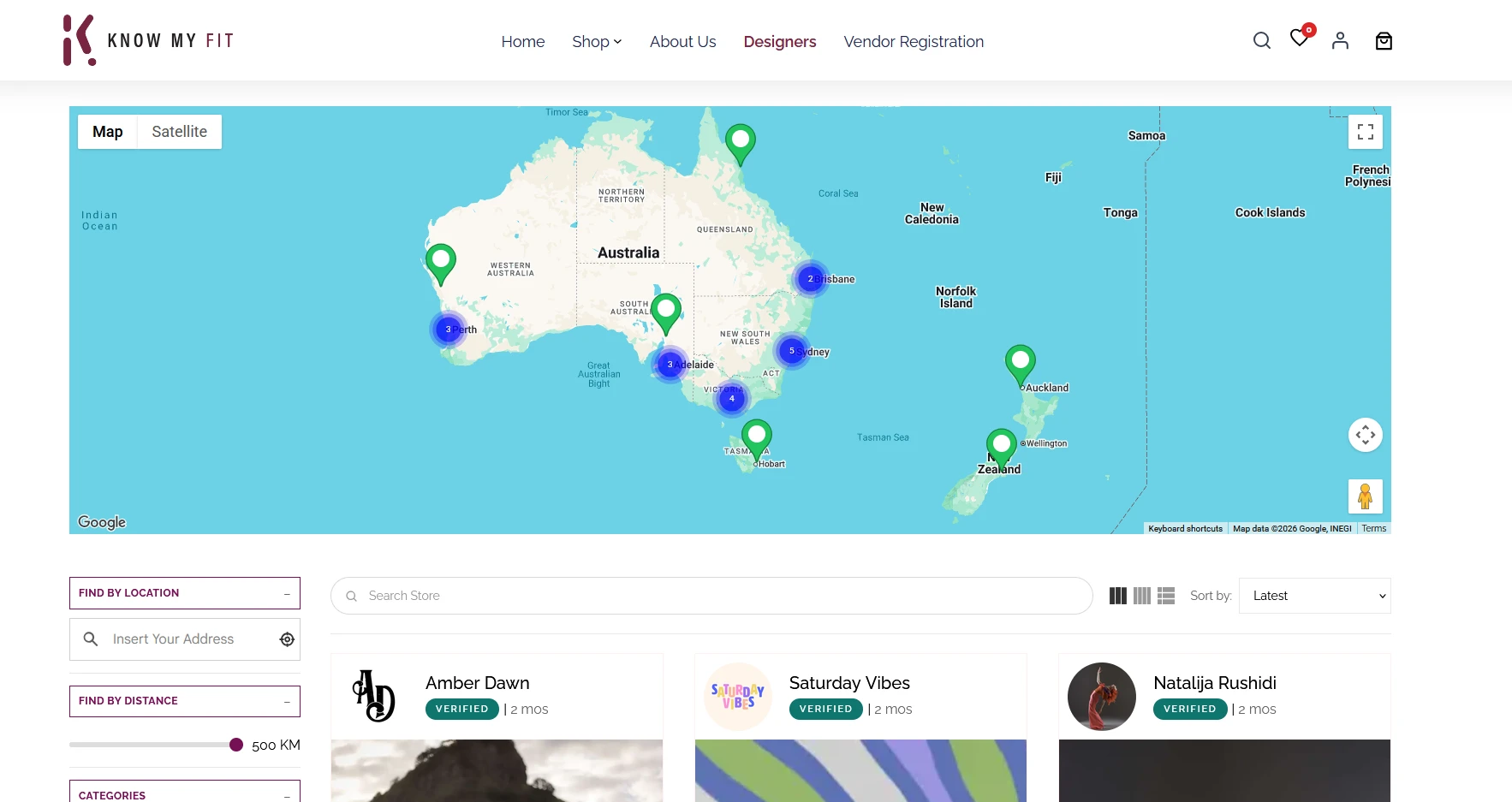
A marketplace can create value through brand/designer discovery as well as product discovery. KnowMyFit includes map/location-based designer discovery, allowing users to browse designers geographically — a business-specific example, not a mandatory feature for every fashion marketplace.
Designer Workflows Should Match the Marketplace Business
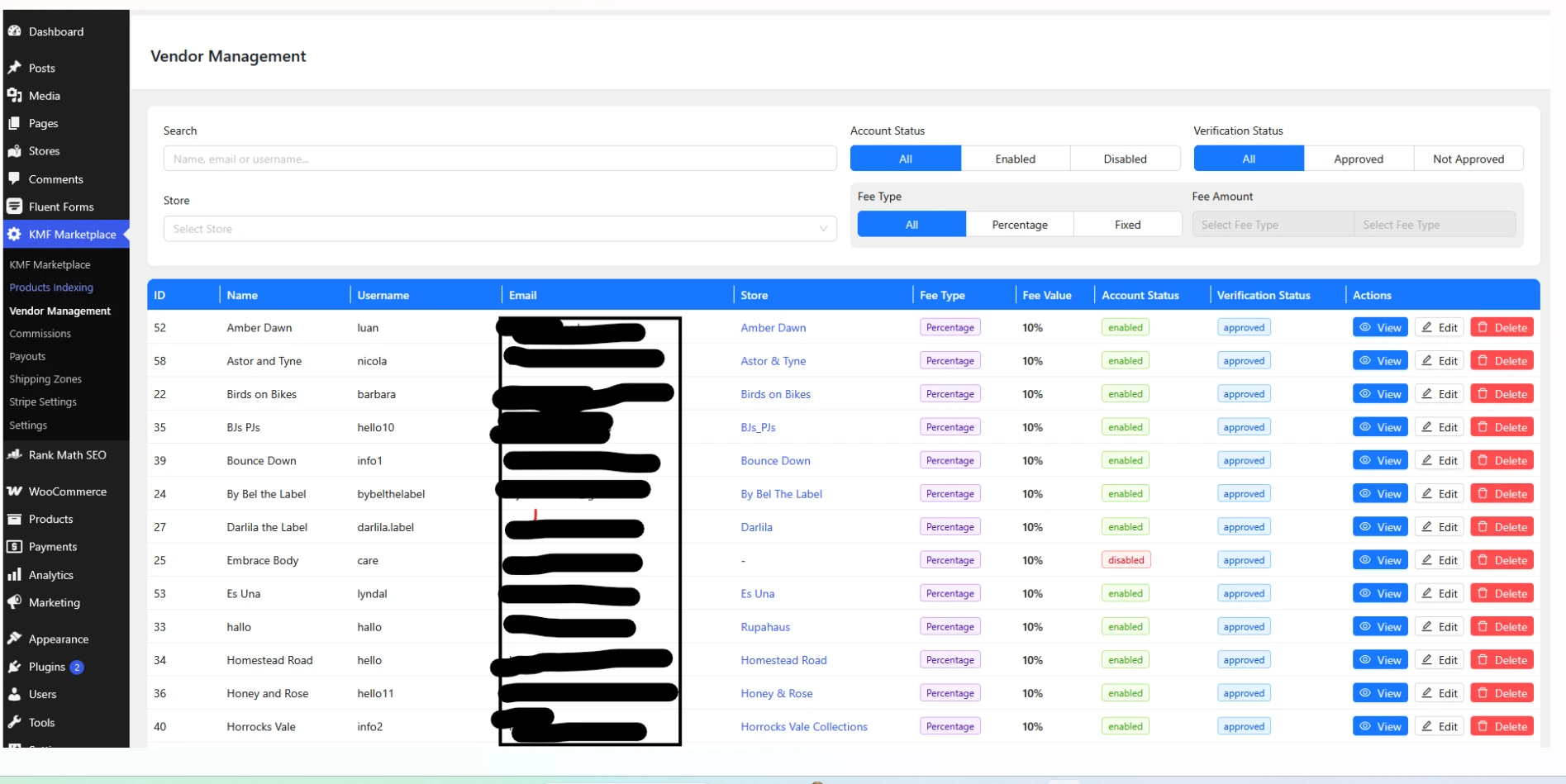
A fashion marketplace may need custom seller onboarding, approval, verification, account status and commission handling: Designer / Brand Joins → Approval / Verification → Store / Account → Products → Commission → Marketplace Operations.

VENDOR REGISTRATION
VENDOR MANAGEMENT
Commissions and Payouts Need More Than One Happy Path
Vendor payment architecture should reflect how the marketplace actually operates. Some vendors may connect directly to a payment platform, while others may require manual or externally processed payouts.
PATH A
Stripe Connect
Connected vendor payout workflow for vendors who use Stripe directly.
PATH B
Manual Payout
PayPal or another external payment, with the administrator recording or adjusting the payout.
Not every designer must have a Stripe account, and not every payout is fully automated.
Checkout Architecture Has to Fit the Marketplace
Payment architecture sometimes changes when real marketplace constraints appear. The correct response is to adapt the system rather than preserve an initial technical assumption that no longer fits.
ORIGINAL APPROACH
Stripe Checkout
Encountered marketplace / vendor-payment limitations.
→
FINAL APPROACH
WooCommerce Native Checkout
Supports required marketplace workflows and standard WooCommerce payment methods, including PayPal.
Business requirements > attachment to the original technical plan.
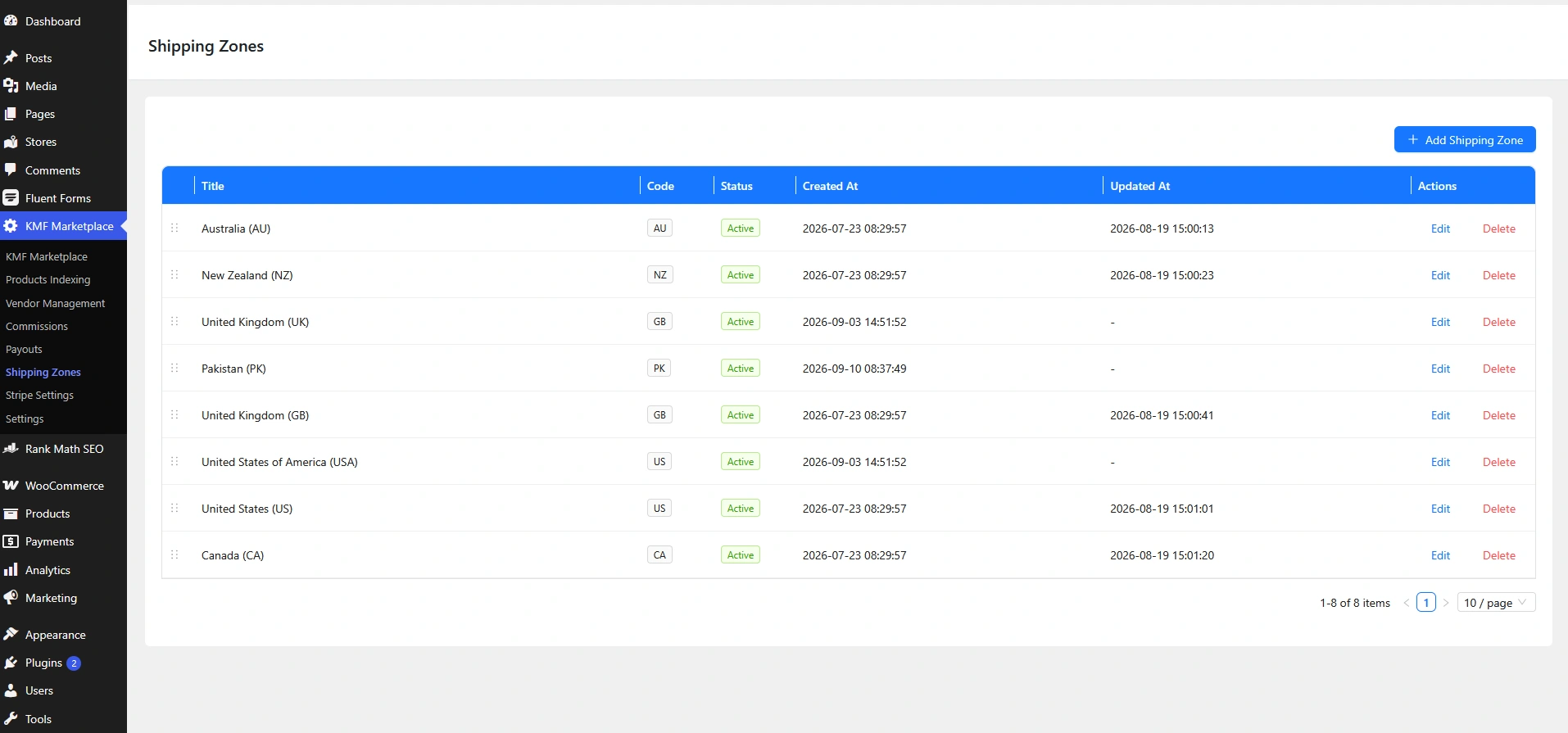
Fashion Marketplaces Need Operational Shipping Controls
Shipping in a fashion marketplace may depend on region, vendor, product, destination or other operational rules. KnowMyFit includes dedicated shipping-zone administration; the countries visible in the captured screenshot are configuration only, not a permanent supported-country list.
Performance Starts With the Data Architecture
A marketplace can have a well-designed filter and still feel slow if each interaction requires expensive runtime queries across products, variations and metadata. In KnowMyFit, SleekAlgo built a dedicated product-indexing system so fit-based discovery didn’t depend on reconstructing complex product data at runtime.
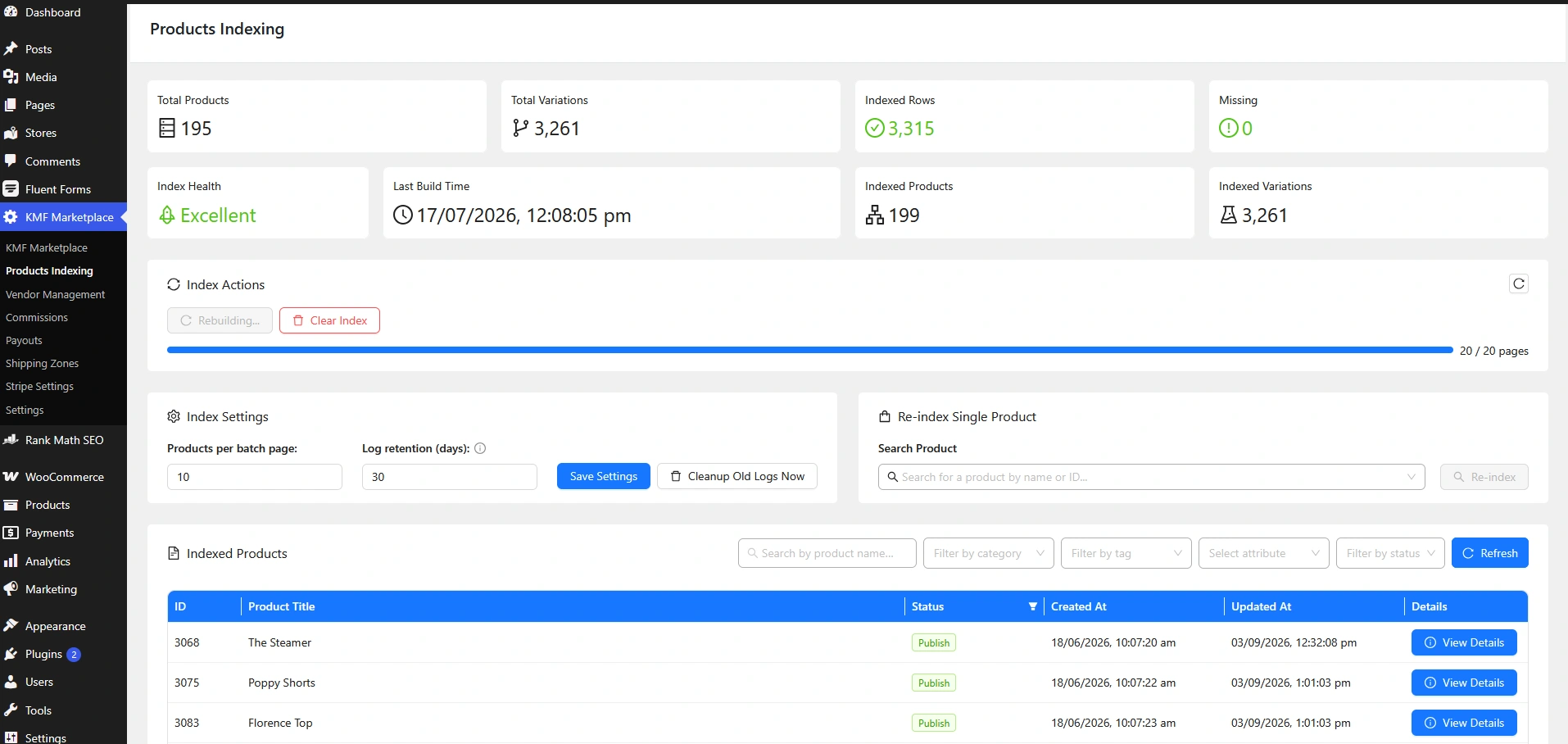
195
total products
3,261
total variations
3,315
indexed rows
0
missing — “Excellent”
Point-in-time KnowMyFit admin proof, captured in the project’s current state — not a permanent catalogue total or marketplace capacity limit.
REAL PROJECT · KNOWMYFIT
Rebuilding KnowMyFit Around the Fashion Marketplace Business
KnowMyFit is a fashion marketplace built around helping customers find clothing that fits their physical measurements while supporting independent designers. The previous platform had become slow, plugin-heavy and difficult to maintain. SleekAlgo rebuilt the frontend and backend around a custom WooCommerce marketplace framework.
The rebuilt platform includes:
Complete frontend/backend rebuild
Custom WooCommerce marketplace framework
Measurement-based product discovery
Custom product/variation indexing
Vendor onboarding and management
Commission handling
Stripe Connect + manual payouts
WooCommerce native checkout with PayPal support
Regional shipping management
Geographic designer discovery
Custom Does Not Mean Rebuilding Ecommerce From Scratch
The goal is not to discard everything WooCommerce already does well. A good custom marketplace keeps the mature commerce foundation and customizes the parts that are limiting the fashion business.
LAYER 01
WooCommerce Foundation
Products, cart, checkout, orders, payment ecosystem.
LAYER 02
Custom Marketplace Layer
Designers/vendors, commissions, payouts, discovery, indexing, operations.
LAYER 03
Fashion-Specific Experience
Fit / measurements, designer discovery, business-specific workflows.
Keep the mature commerce foundation. Customize the parts limiting the marketplace.
What We Can Build
Multi-Vendor Marketplace Architecture
Designer / Brand Onboarding
Vendor Management
Commission & Payout Workflows
Fit / Measurement Discovery
Custom Search & Filtering
Product Indexing
Location-Based Discovery
Marketplace Checkout
Regional Shipping Controls
Presented as possible capabilities — not every fashion marketplace requires all of them.
Our Marketplace Development Process
01
Map the marketplace business model
Customers, designers, products, commissions, payouts, shipping.
02
Map customer + designer journeys
Discovery, fit, onboarding, operations, on both sides of the marketplace.
03
Audit the existing architecture
Identify plugin bottlenecks, duplicated responsibilities, fragile workflows.
04
Design discovery + operational workflows
Fit, designer discovery, onboarding, commissions, payouts, shipping.
05
Build the marketplace layer
Storefront, discovery, onboarding, accounts, administration.
06
Test real marketplace scenarios
Customer flows, designer states, commissions, payouts, shipping, edge cases.
Not Every Fashion Marketplace Needs a Custom Framework
If standard WooCommerce and an established marketplace extension can cleanly support the required workflows and performance, use them. Custom development should solve genuine limitations rather than introduce unnecessary complexity.
The simplest reliable marketplace architecture that supports the fashion business.
Fashion Marketplace FAQ
Yes. WooCommerce can provide the core commerce foundation for products, cart, checkout and orders, while the marketplace-specific layer can be implemented with suitable plugins or custom development depending on the business requirements.
Yes. KnowMyFit is direct proof of a marketplace built around independent/local designers, including vendor onboarding and management, designer discovery, commissions, payouts and custom product discovery.
Yes, when the product data supports it. KnowMyFit uses chest, waist, hips and inseam measurement ranges as part of marketplace product discovery.
Marketplace commission logic can be designed around the business requirements. KnowMyFit includes vendor management and commission handling; exact rules should be defined during discovery.
No. KnowMyFit supports Stripe Connect for connected vendors and also includes an administrative manual-payout path for vendors paid through other methods.
Yes. KnowMyFit was rebuilt from a slow, plugin-heavy marketplace architecture into a custom WooCommerce marketplace framework.
Yes, regional shipping logic can be implemented around the marketplace requirements. KnowMyFit includes custom shipping-zone management across multiple regions.
No. If standard WooCommerce and a reliable marketplace extension can support the business cleanly, that may be the better architecture. Custom development should solve a real limitation, not add complexity for its own sake.
Build a Fashion Marketplace Around How Customers Shop and Designers Operate
Work with our team remotely to map the customer and designer journeys, product data, payout requirements and shipping regions. We then plan the WooCommerce marketplace around those approved business rules.