
SPORTS EQUIPMENT ECOMMERCE DEVELOPMENT
Custom Sports Equipment Ecommerce Built Around the Product
Sports equipment often carries more buying logic than a standard ecommerce product page can comfortably handle. Models, materials, sizes, weights, colors, patterns, logos, personalization and production options may all change what the customer can buy — and sometimes what it costs. SleekAlgo builds WooCommerce experiences around those real product rules.
Custom Product Builders
Live Preview
Model-Specific Options
Dynamic Pricing
Order-Ready Configuration
Sports Products Rarely Fit a One-Size-Fits-All Product Page
A simple product with a few sizes or colors may work perfectly with native WooCommerce variations. The challenge starts when each model has different choices, some selections affect price, visual personalization matters, or customers need to build the product before they can order it.
Common requirements can include:
Different configuration rules by product or equipment model
Size, weight, material or performance-related choices
Colors, patterns, finishes, logos, names or other personalization
Option-dependent pricing and upgrades
Live or layered product previews
Production-time choices such as standard or rushed fulfillment
Configuration details that must remain attached to the WooCommerce order
Backend controls that staff can manage without editing code
Built Around the Equipment — Not Around a Generic Configurator
The buying experience should reflect how the product is actually manufactured, personalized and fulfilled. We map the rules first, then decide what should remain native WooCommerce functionality and what needs a purpose-built configuration layer.
Equipment Model
→
Available Options
→
Customer Configuration
→
Preview + Price
↓
Cart / Order
Product / model-specific option groups & conditional or dependent selections
Option-level pricing & visual assets with live preview behavior
Validation for incompatible combinations & cart, checkout and order integration
Management tools for products, options, pricing and assets
REAL PROJECT · ANNEX BASEBALL
Bringing Custom Baseball Bats Online
Annex Baseball sold customized baseball bats offline and needed an online experience where customers could configure and order them directly. SleekAlgo built a fully custom WordPress / WooCommerce bat-builder plugin around the product rules.
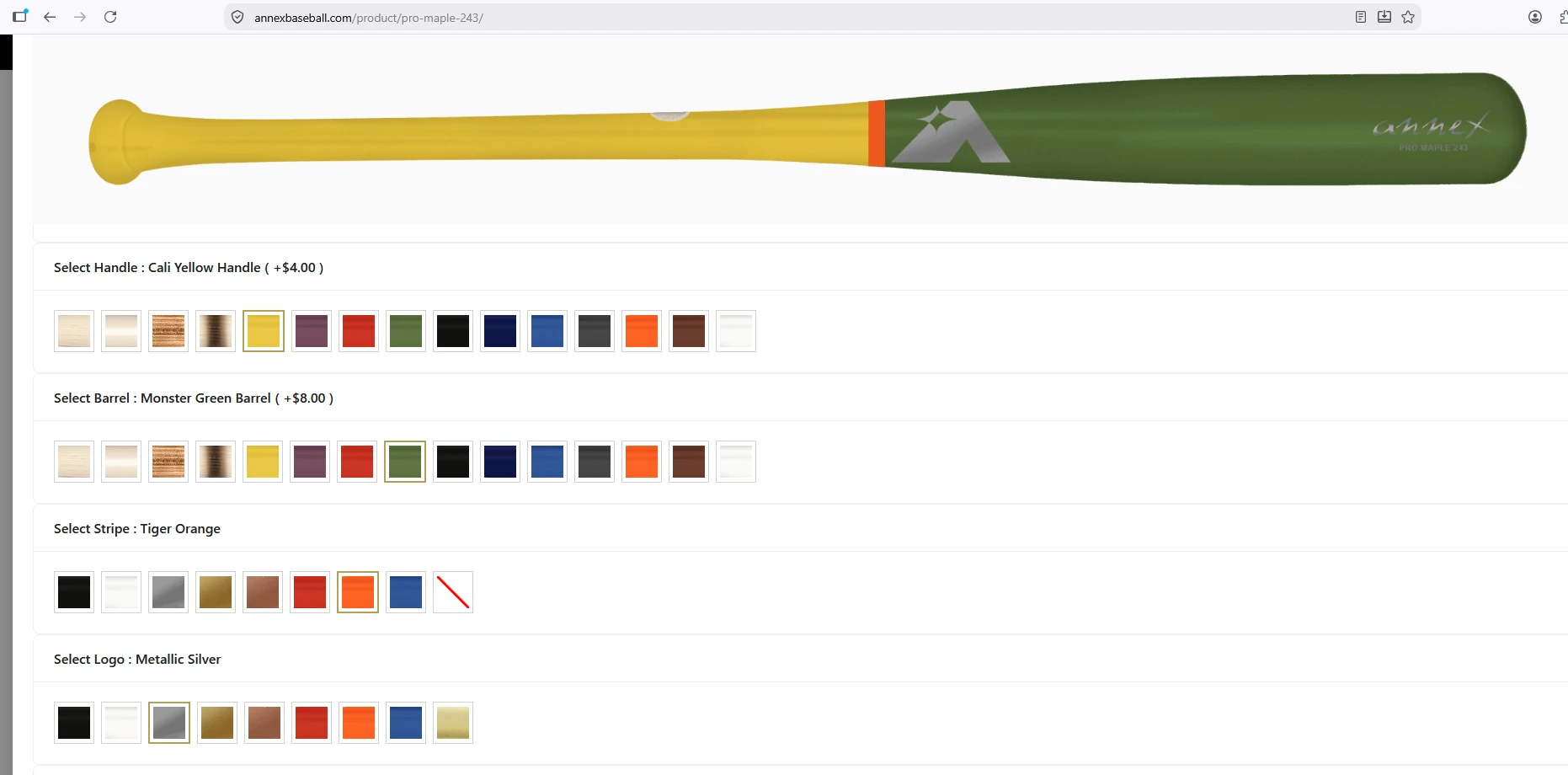
Customers can configure options including:
Wood Type
Cupping
Size
Weight
Handle Color/Pattern
Barrel Color/Pattern
Stripe Color/Pattern
Logo Color/Pattern
Custom Name
Standard / Rushed Production
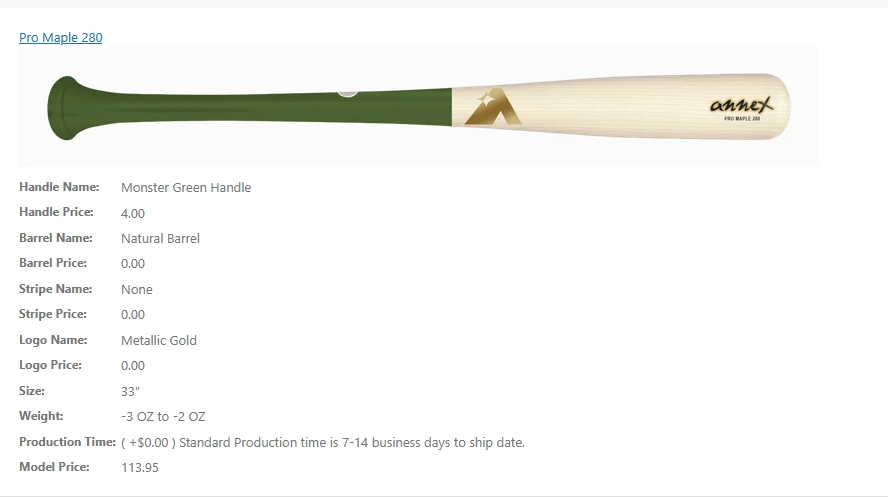
Some options affect price, and each bat model can expose its own available choices. The completed configuration is retained in WooCommerce cart and order data so the customer and fulfillment team can see exactly what was ordered.
Live Preview Turns Configuration Into a Buying Experience
For personalized equipment, customers often need to see the result before they commit. Annex Baseball uses a live visual preview that updates as colors and patterns change. The difficult part was not simply swapping one product image for another — separate handle, barrel, stripe, logo and text assets had to be sliced and aligned precisely.
Handle Layer
Barrel Layer
Stripe Layer
Logo / Text Layer
↓
One Seamless Bat Preview
Independently controlled layers had to combine precisely so the result reads as one finished product, not a stack of swapped images.
Different Equipment Models Can Have Different Rules
A sports catalogue may contain products that look related but cannot share one universal option set. A custom architecture allows configuration rules to live at the model level instead of forcing every product through the same template.
Model
→
Option Groups
→
Individual Options
→
Title / Price / Priority / Image / Icon
For Annex Baseball, the custom builder administration supports model-level management for handles, barrels, logos, barrel text, stripes, weights and sizes — each individual option can carry its own title, price, priority, image and icon.
The Backend Has to Work for the Team Too
A strong storefront is only half the system. Sports brands need practical controls for managing changing products, visual assets and option pricing without asking a developer to make every routine update. The goal is a custom buying experience that remains manageable after launch.
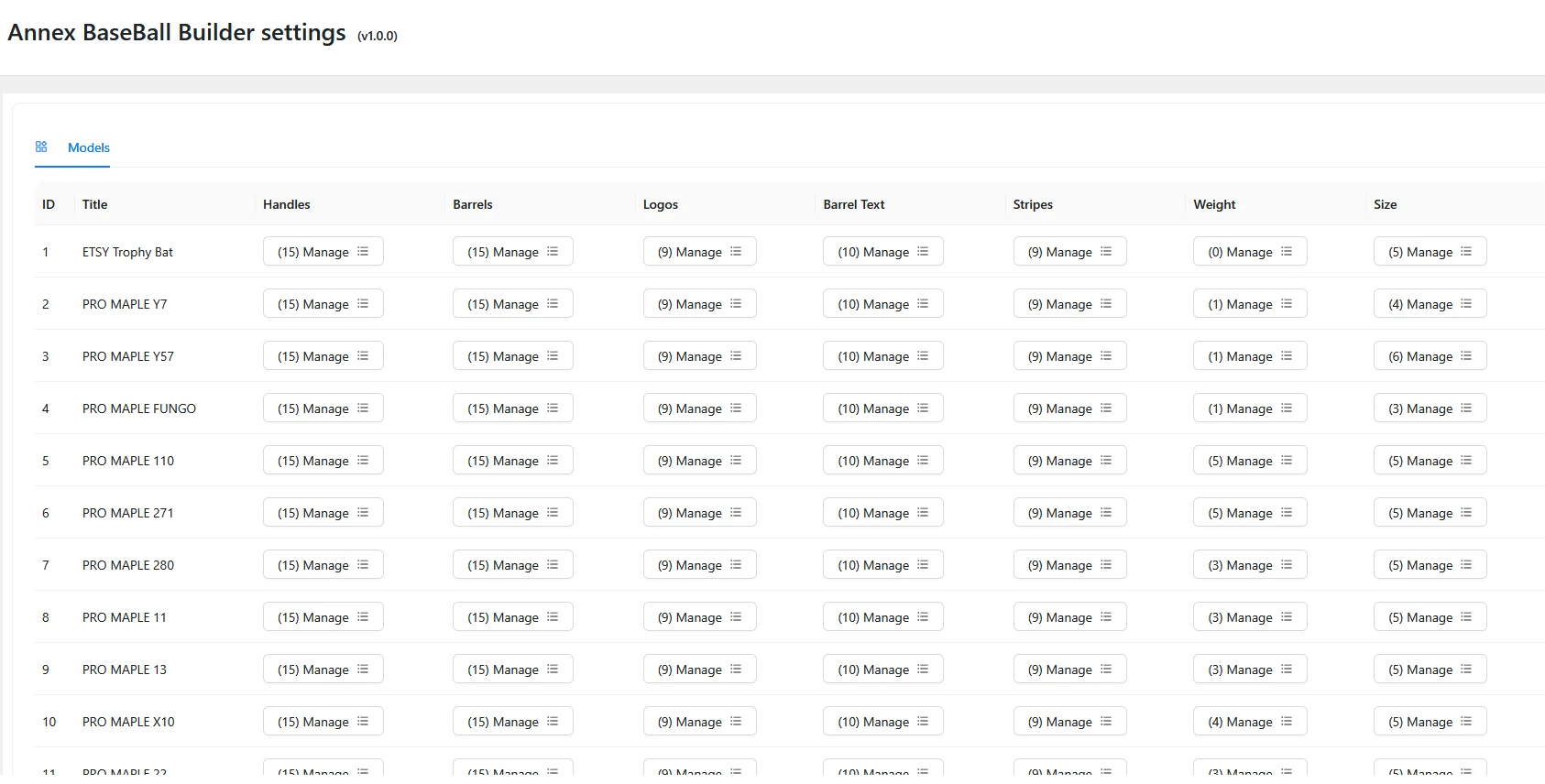
MODEL & OPTION-GROUP MANAGEMENT
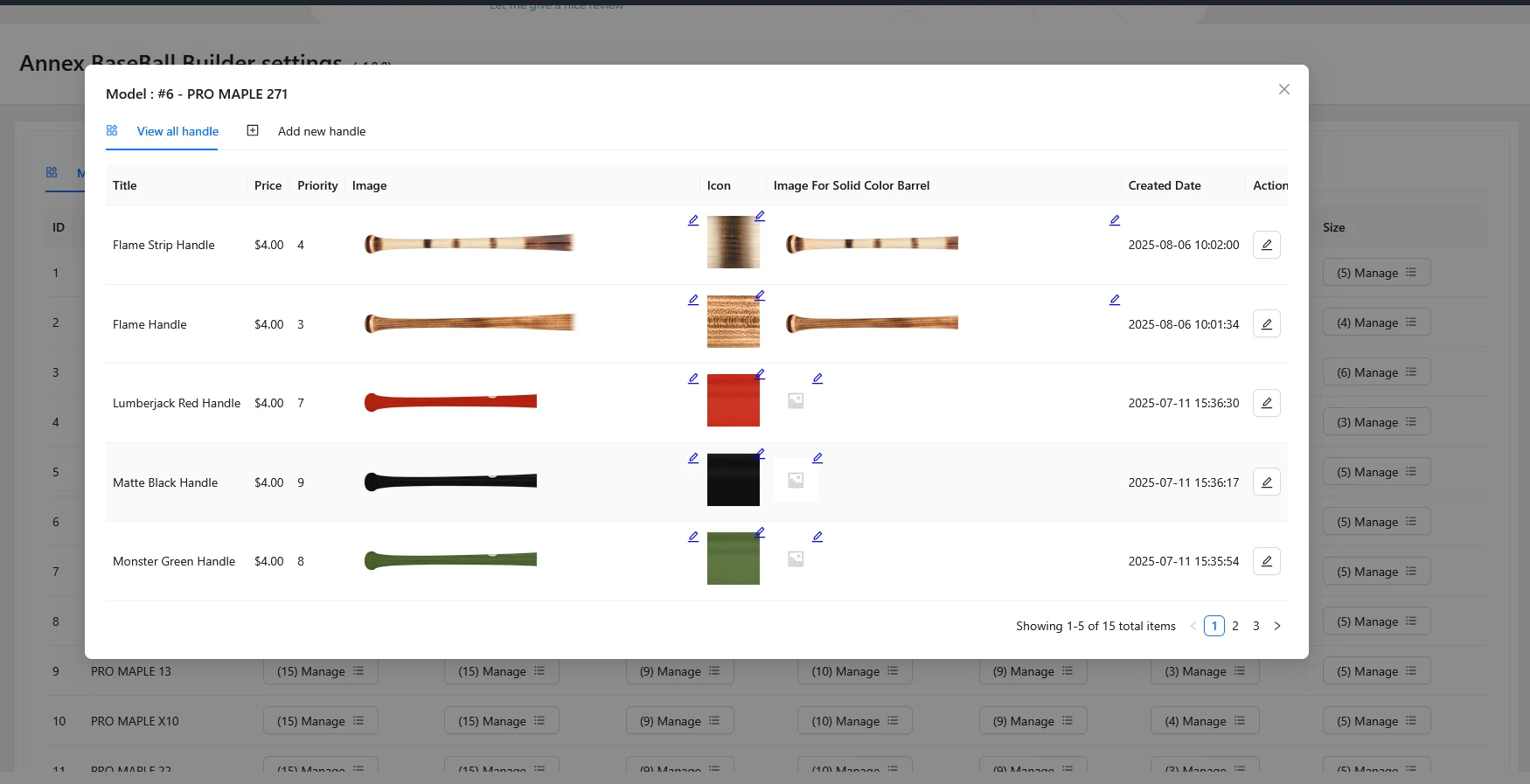
HANDLE OPTION MANAGEMENT
The Configuration Should Follow the Customer Into the Order
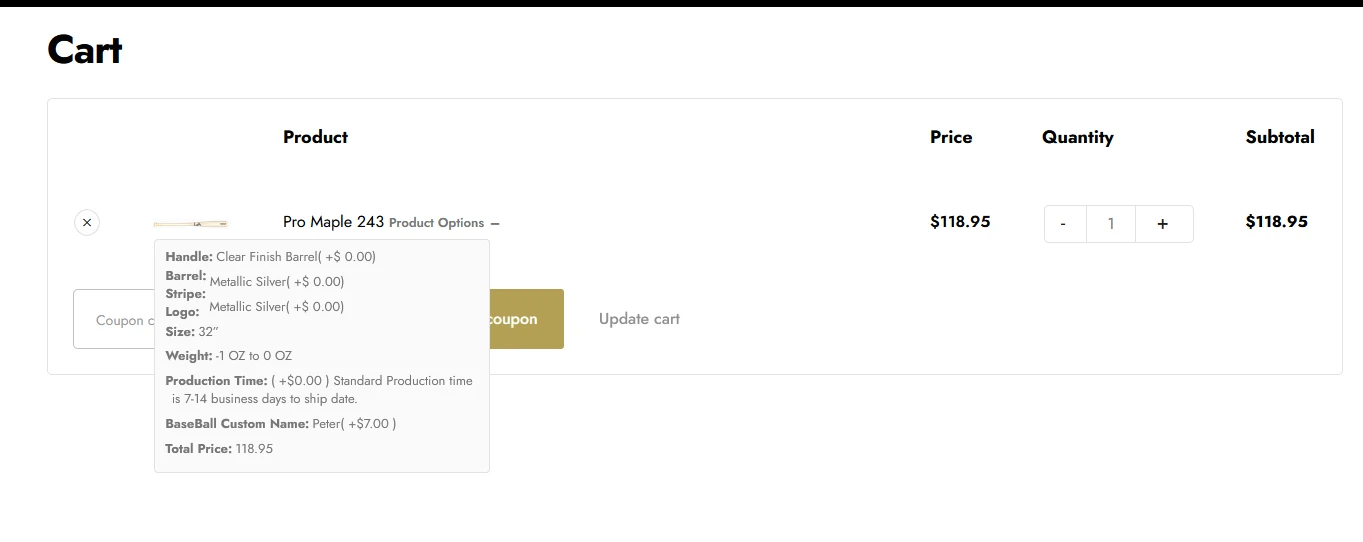
Personalized equipment cannot lose its selections after Add to Cart. The configuration should remain visible through cart and checkout and be stored with the WooCommerce order so fulfillment has the information required to produce the item correctly.
Product Builder
↓
Cart Summary
↓
Checkout
↓
Order / Fulfillment
Designed for the Product You Actually Sell
Custom sports ecommerce does not mean every store needs the same features. The correct architecture depends on the product and buying process — some businesses may need a simple personalization layer; others may need model-specific options, dynamic pricing, visual previews or custom backend tooling. Annex Baseball remains the direct proof; the possibilities below are examples of the kinds of logic a custom system can support, not claims that every feature has already been built.
Sizing
Weight
Materials
Team / Player Personalization
Logos
Engraving / Text
Add-ons
Bundles
Production Options
Our Process
Product rules, visual assets and order requirements can be reviewed remotely with your team. We use agreed model configurations to check previews, pricing and fulfillment details before launch.
01
Map the equipment rules
Models, options, dependencies, pricing, personalization and fulfillment requirements.
02
Design the product architecture
Decide what belongs in native WooCommerce and what requires custom data / logic.
03
Design the buying experience
Turn complex product decisions into a clear customer flow.
04
Build the configurator
Option logic, pricing, preview behavior and WooCommerce integration.
05
Build the management workflow
Practical controls for staff to maintain the product data they need.
06
Test real combinations
Pricing, allowed options, responsive behavior, cart/order data and edge cases.
Not Every Sports Product Needs Custom Development
If standard WooCommerce products, variations or a reliable existing extension can handle the requirements cleanly, we should use them. Custom development is justified when the product rules, personalization, management workflow or customer experience genuinely require it.
The simplest reliable ecommerce architecture that fits the equipment.
Sports Equipment Ecommerce FAQ
Yes. WooCommerce can remain the commerce, cart, checkout and order foundation while custom development handles product-specific configuration, personalization or visual-preview logic.
Yes. A custom architecture can expose different sizes, weights, colors, patterns, add-ons or other option groups by product or model.
Yes. Options can add or change pricing according to the approved business rules, without requiring every possible combination to exist as a conventional WooCommerce variation.
Yes, when suitable visual assets are available. Annex Baseball, for example, uses aligned visual layers so customers can preview changes to the bat while configuring it.
Yes, where the product workflow requires it. Text, logos, colors, patterns and similar personalization can be incorporated into the configuration architecture.
Yes. The chosen configuration can be carried into cart, checkout and order records so customers and fulfillment staff can see what was ordered.
Yes. Where appropriate, we build admin interfaces for managing models, option groups, individual options, pricing, priority and visual assets.
No. Annex Baseball is a real example of our sports-equipment work, but the architecture is designed around the rules of each product rather than one fixed baseball template.
Your Sports Equipment Store Should Fit the Product — Not a Generic Ecommerce Template
If your equipment requires customization, personalization or buying logic that standard product pages cannot represent cleanly, SleekAlgo can build the WooCommerce experience around the way your products are actually sold.